
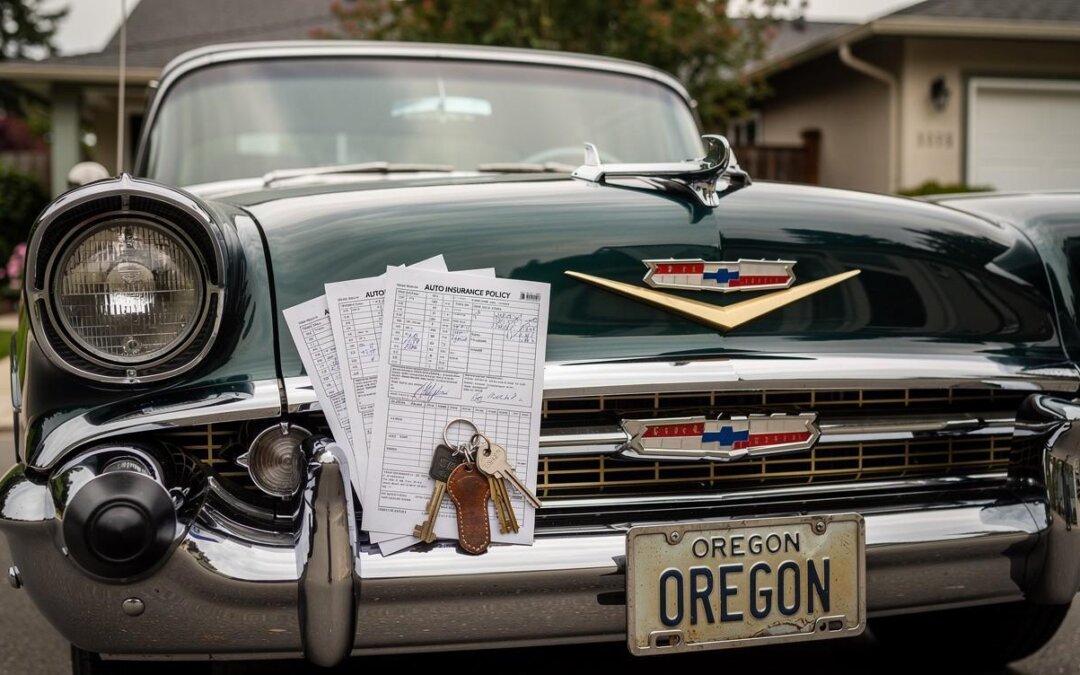
Your antique car deserves protection that standard auto policies simply don’t provide. At AOA West, Inc., we understand that classic vehicles require specialized coverage tailored to their unique needs.
Whether your prized automobile sits in a climate-controlled garage or hits the road occasionally, antique car insurance in Oregon offers solutions designed specifically for collectors like you. This guide walks you through the coverage options available and how to select the right policy for your investment.
Why Antique Cars Need Different Insurance
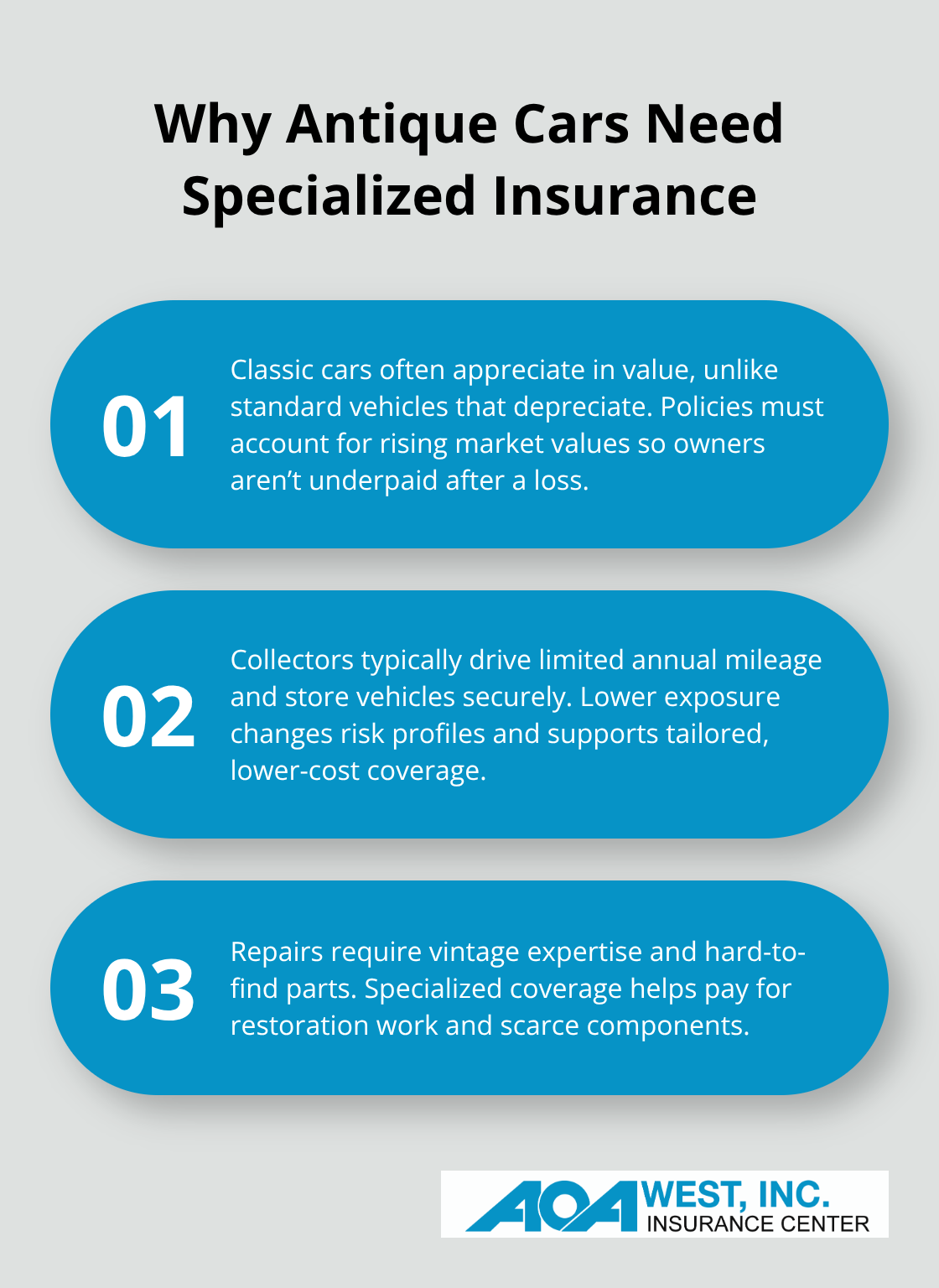
Antique cars in Oregon appreciate in value, which is the opposite of what happens to standard vehicles. According to Hagerty, classic vehicles gain worth over time, especially if you maintain and document them properly. Standard auto insurance calculates payouts using actual cash value, meaning your 1967 Chevrolet Impala receives a valuation far below what you paid for it or what it’s actually worth today. This is where agreed value coverage becomes essential. With agreed value policies, you and your insurer settle on the car’s value at policy inception, and the provider will pay you the full agreed-to amount in the event of a covered total loss, less any applicable deductible. An up-to-date appraisal every three to five years keeps this value accurate, particularly after significant restorations.
Usage Patterns Dramatically Lower Your Premiums
Antique car owners typically drive their vehicles sparingly. Most classic car policies in Oregon impose annual mileage limits, often ranging from 2,500 to 5,000 miles per year. This restricted usage differs significantly from commuting daily in a standard vehicle. Insurance Information Institute data shows that specialty antique car policies cost substantially less than standard auto insurance precisely because of these lower-mileage patterns and reduced accident exposure. Your 1955 Thunderbird sits in a climate-controlled garage for most of the year and represents far less risk than a daily driver. Storing your vehicle in a locked, secure space in Oregon reduces premiums further and protects against theft, vandalism, and weather damage.
Repairs Require Expert Hands and Specialized Parts
Finding replacement parts for a 1972 Oldsmobile 442 differs entirely from ordering components for a 2020 Honda Civic. Antique vehicles demand specialized mechanics who understand vintage engineering, electrical systems, and restoration techniques. Standard body shops often lack the expertise and parts availability for older models. Specialty insurers recognize this reality and offer spare parts coverage and restoration coverage options tailored specifically for classic cars. These add-ons protect your investment during long-term restoration projects and cover hard-to-find components that cost significantly more than modern equivalents. You should maintain thorough documentation of all restoration work, receipts, and photographs-this substantiates your vehicle’s value and accelerates claims if damage occurs.
What Comes Next in Your Coverage Search
The differences between antique and standard vehicles make specialized insurance not just helpful but necessary. Your classic car’s appreciation potential, limited mileage, and specialized repair needs all point toward coverage designed specifically for collectors. Understanding these distinctions prepares you to evaluate the actual coverage options available in Oregon and select the policy that truly protects your investment.
Coverage Options for Antique and Classic Cars in Oregon
Agreed Value Coverage: The Foundation of Collector Protection
Agreed value coverage stands as the foundation of any serious antique car insurance policy in Oregon, and frankly, it’s the only approach that makes sense for vehicles that appreciate over time. You and your insurer establish the car’s value at the start of your policy based on an appraisal, and that amount is locked in. If your 1967 Chevrolet Impala suffers a total loss, you receive the full agreed value minus your deductible-not the depreciated amount a standard insurer would calculate. This protection prevents the frustration of underpayment that collectors face with actual cash value policies. You’ll need a current appraisal to establish this value, and it’s recommended you update your appraisal every three to five years, especially after major restoration work. Higher-value vehicles warrant professional appraisals from recognized sources, which reflect current market conditions across Oregon. Without agreed value coverage, you’re gambling that your insurer will recognize your vehicle’s true worth when it matters most.
Specialized Coverage for Restoration and Parts
Oregon collectors should evaluate spare parts and restoration coverage alongside storage protection tailored to classic vehicles. Specialty insurers recognize that restoring a 1972 Oldsmobile 442 involves sourcing hard-to-find components that cost far more than modern replacements, and some carriers offer add-on coverage for these parts and the restoration process itself. You should maintain thorough documentation of all restoration work, receipts, and photographs-this substantiates your vehicle’s value and accelerates claims if damage occurs. Storage coverage matters significantly in Oregon’s climate-comprehensive protection typically includes theft, vandalism, fire, hail, and weather damage, but confirm exact inclusions with your carrier since policies vary.
Storage, Climate Control, and Liability Protection
Storing your vehicle in a locked, climate-controlled space reduces your premiums and minimizes rust and deterioration risk, which is particularly important given Oregon’s moisture. Liability protection rounds out your policy and covers bodily injury and property damage you cause while driving your collector car, though most Oregon policies restrict daily driving and typically allow participation in car shows and parades within mileage limits. When comparing quotes from multiple carriers, request side-by-side details on coverage limits, deductible options, and any add-ons-higher deductibles lower premiums but increase your out-of-pocket costs after a loss.
Finding the Right Coverage Combination for Your Vehicle
Multiple carriers offer different combinations of these protections, and the right policy depends on your vehicle’s value, how you plan to use it, and your budget. Some insurers offer additional add-ons such as spare parts coverage, inflation protection, or enhanced appraisals that can shift your decision. Roadside assistance is often available with classic-car policies and can prove valuable for older vehicles that may require help after a breakdown. The coverage options you select directly impact both your premium and your protection level, so comparing specific details across carriers matters far more than selecting based on price alone. Your next step involves getting a quote to assess your vehicle’s actual value and understanding how different policy structures affect what you’ll pay and what you’ll receive if a loss occurs.
How to Choose the Right Antique Car Insurance Policy
Start with an Accurate Appraisal
An accurate appraisal determines everything that follows in your coverage search. The Hagerty Valuation Tool reflects current market conditions across Oregon and provides documentation that insurers recognize, making it far more credible than estimates or outdated values. A professional appraisal typically costs between $150 and $300 but protects you from underpaying for coverage or overpaying premiums based on inflated values. Once you have your appraisal in hand, you’re ready to contact multiple specialty carriers for quotes.
Compare Quotes from Multiple Carriers
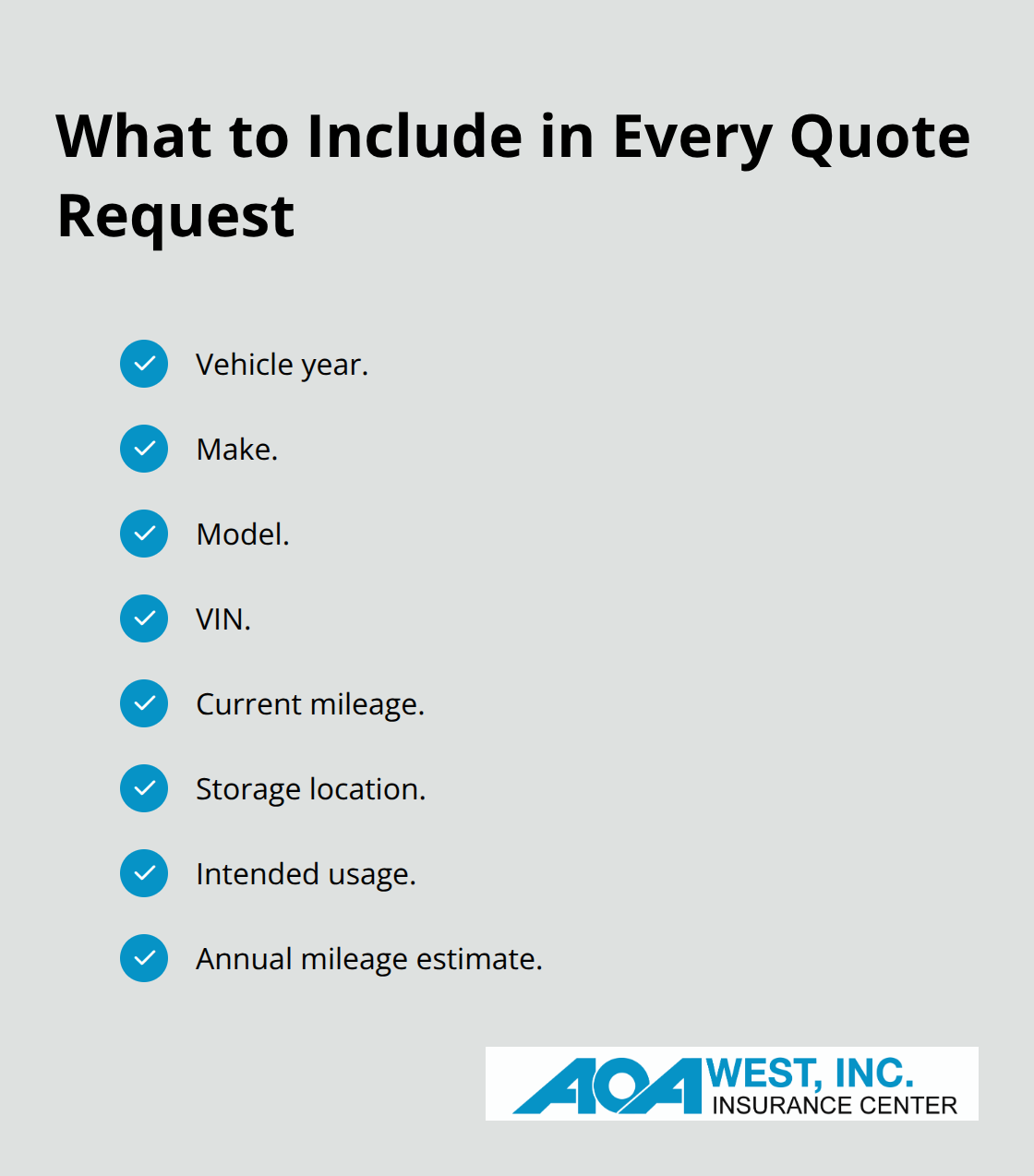
Most collectors make a critical mistake here-they accept the first quote without comparison. Hagerty, American Collectors Insurance, and regional carriers all price policies differently based on their underwriting criteria, and the difference between the lowest and highest quote can easily exceed $200 annually. When you request quotes, provide identical information to each carrier: your vehicle’s year, make, model, VIN, current mileage, storage location, intended usage, and annual mileage estimate. This approach ensures you’re comparing actual coverage rather than different assumptions about your vehicle.
Evaluate Deductible Options and Coverage Limits
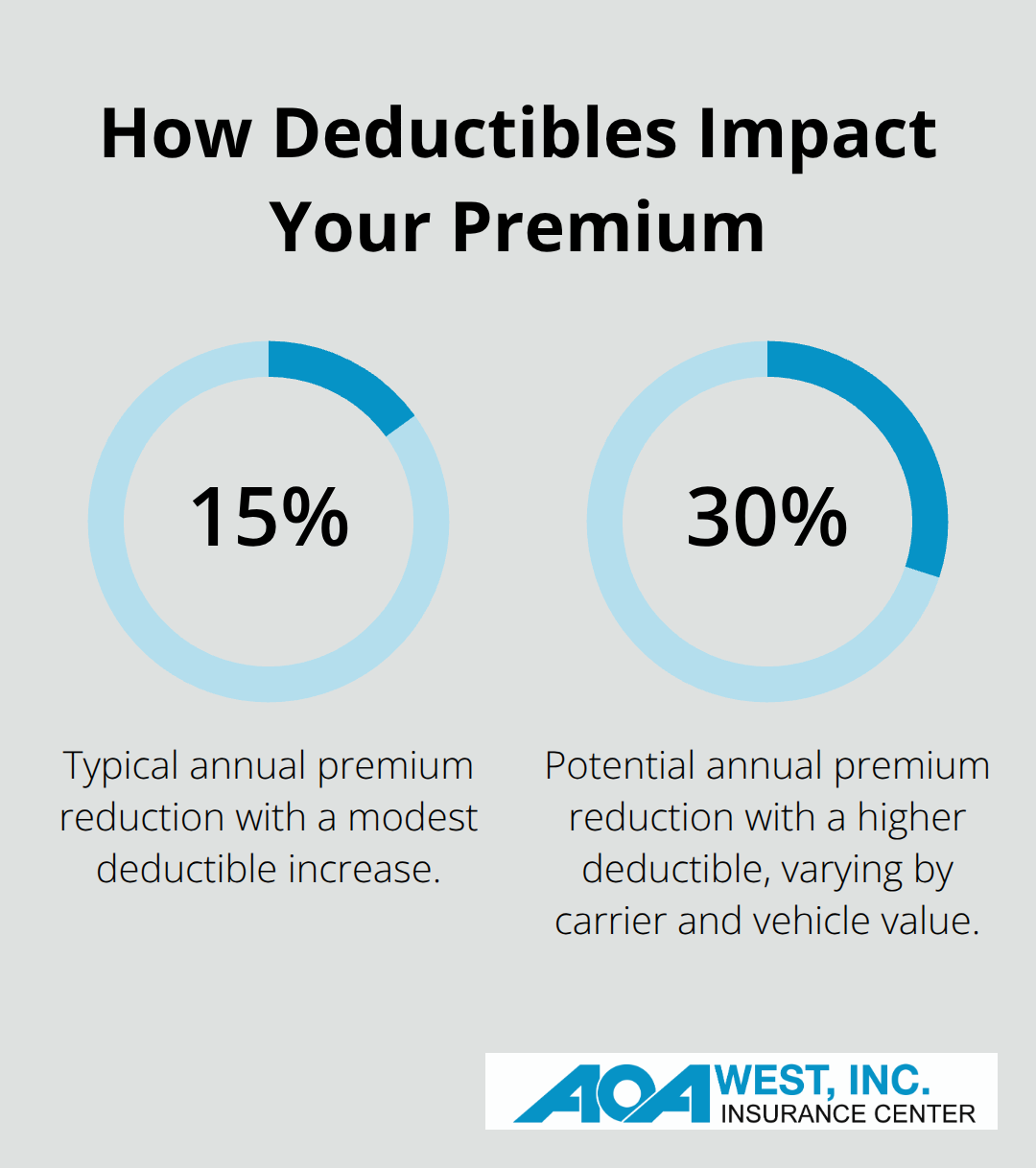
Your deductible choice directly impacts your premium, and higher deductibles can reduce your annual cost by 15 to 30 percent depending on the carrier and your vehicle’s value. However, this savings comes with real risk-if your 1967 Chevrolet Impala suffers a collision, you’ll pay that deductible out of pocket before your insurer covers the rest. For high-value vehicles, many collectors choose a $500 deductible as a compromise between manageable premiums and reasonable out-of-pocket exposure.
Coverage limits matter equally; confirm that your policy covers agreed value, not a percentage of it, and verify that liability limits meet Oregon’s minimum requirements while protecting your personal assets. Request side-by-side policy comparisons from each carrier showing coverage types, limits, deductibles, annual mileage allowances, storage requirements, and any add-ons like spare parts coverage or roadside assistance.
Get Professional Guidance on Your Options
Working with an independent agent who represents multiple carriers helps you navigate these decisions with confidence. An agent can provide personalized comparisons that show exactly what you’re getting from each option, making your decision straightforward rather than overwhelming.
Final Thoughts
Protecting your antique car requires more than standard auto insurance-it demands coverage built specifically for vehicles that appreciate, sit in secure storage, and demand specialized repairs. Agreed value coverage, specialized add-ons, and accurate appraisals form the foundation of proper collector protection in Oregon. Your next step is straightforward: gather your vehicle’s appraisal and documentation, then request quotes from multiple carriers using identical information.
Finding the right antique car insurance Oregon policy becomes significantly easier when you work with someone who understands both the vehicles and the carriers. We at AOA West, Inc. have served Tigard and the surrounding Oregon communities since 1979, helping collectors and enthusiasts protect their investments with personalized guidance and clear comparisons across multiple carriers. Our team evaluates your vehicle’s actual value, explains your coverage options, and selects protection that matches your budget and your car’s needs.
Contact AOA West, Inc. today for a quote on your classic car. We walk you through the process, answer your questions, and help you choose coverage with confidence. Your prized automobile deserves protection from someone who genuinely understands what makes it special.
Disclaimer: The information provided in this blog is for general informational purposes only and does not constitute legal, financial, or insurance advice. Coverage options, terms, and availability may vary. Please consult with a licensed professional for advice specific to your situation. Artificial intelligence may have been used to generate text and images in some blog articles.