
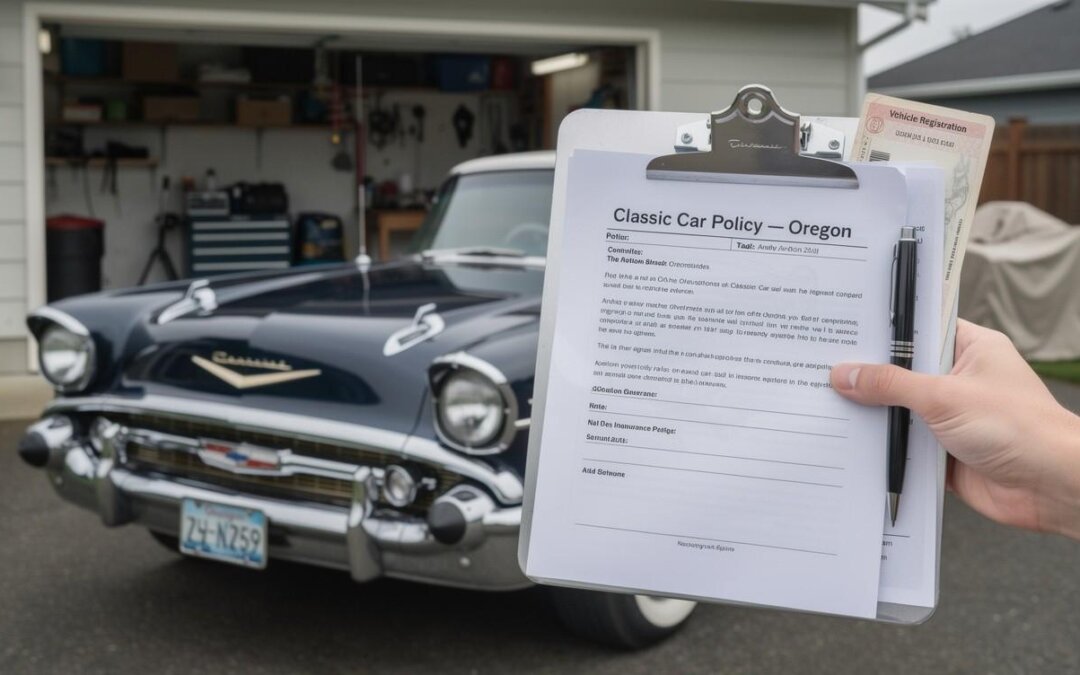
Your classic car represents more than just transportation-it’s an investment that deserves specialized protection. Standard auto insurance policies fall short for collector vehicles, which is why a classic car policy in Oregon requires different coverage strategies.
At AOA West, Inc., we help Tigard-area collectors navigate the unique insurance needs of their prized automobiles. This guide walks you through what makes classic car coverage different and how to find the right protection for your collection.
Why Standard Auto Insurance Fails Classic Cars
Classic cars operate under fundamentally different economics than daily drivers, and standard auto policies simply don’t account for this reality. In Oregon, a vehicle qualifies as classic if it’s at least half the number of years between the current year and 1900, meaning a car built in 2004 or earlier can qualify. Once registered as an antique vehicle, your car is restricted to exhibitions, parades, club activities, and similar events-not commuting to work or running errands. This limited use is the first reason standard policies don’t work: insurers price daily-driver coverage assuming 12,000 to 15,000 miles annually, but your classic car might only see 1,000 to 3,000 miles per year. You overpay for coverage designed for vehicles that spend far more time on the road.
The Agreed Value Problem with Standard Policies
Standard auto insurance uses actual cash value calculations that destroy collector-car payouts. A restored 1955 Ford F-100 valued at $40,000 illustrates this perfectly: a standard policy would calculate its actual cash value at claim time, potentially paying only $20,000 or $25,000 after depreciation. Agreed value coverage flips this entirely-you and the insurer establish the car’s worth upfront, and that’s what you receive in a total loss, no depreciation haircut. Classic car values often appreciate, not depreciate, which means your $40,000 collector car might be worth $50,000 in five years.
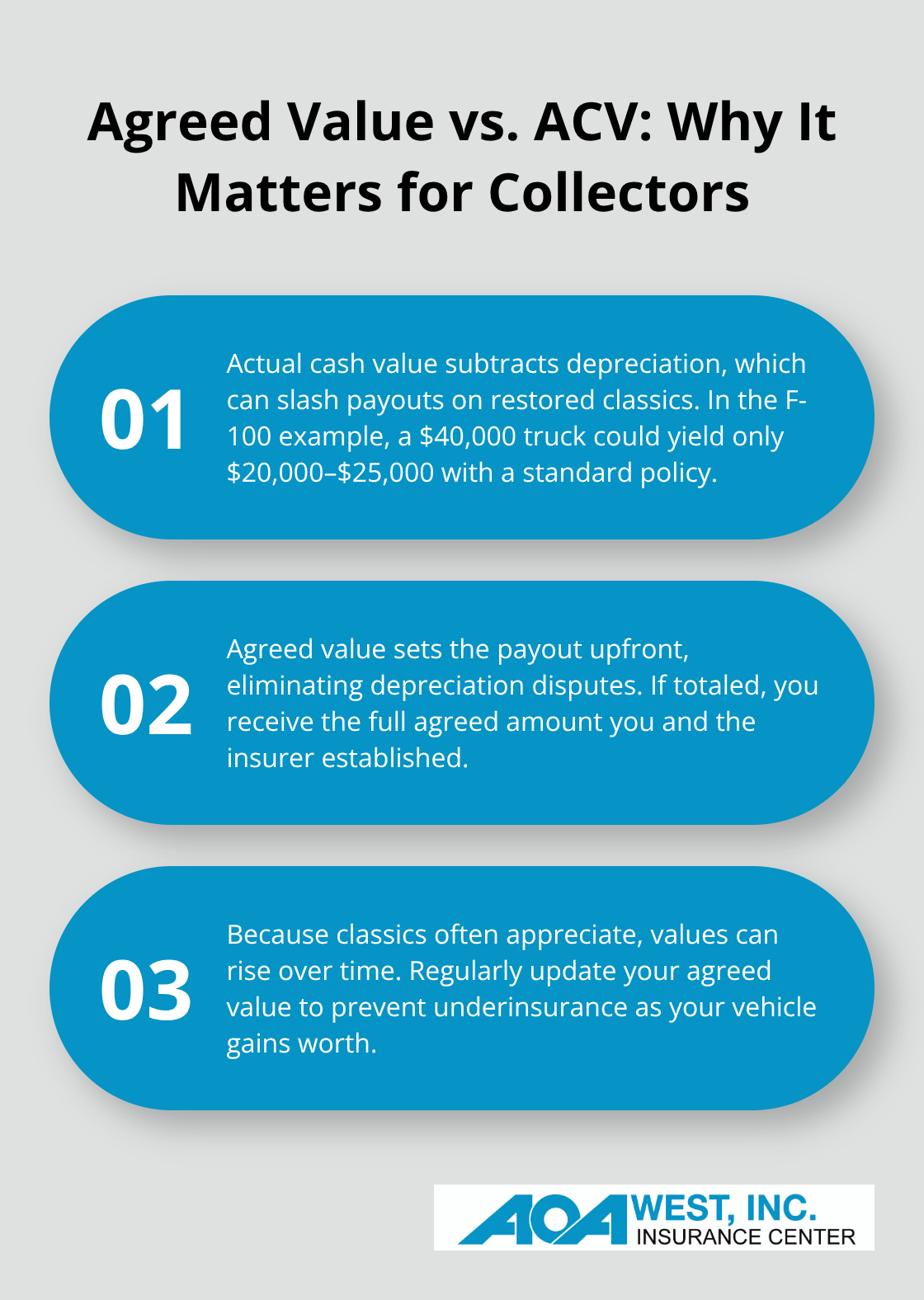
Standard policies won’t account for this appreciation, leaving you significantly underinsured. You must update your policy values regularly as your collection grows in value, or you risk having a gap between what your car is actually worth and what you’d receive in a claim.
Storage, Mileage, and Usage Requirements
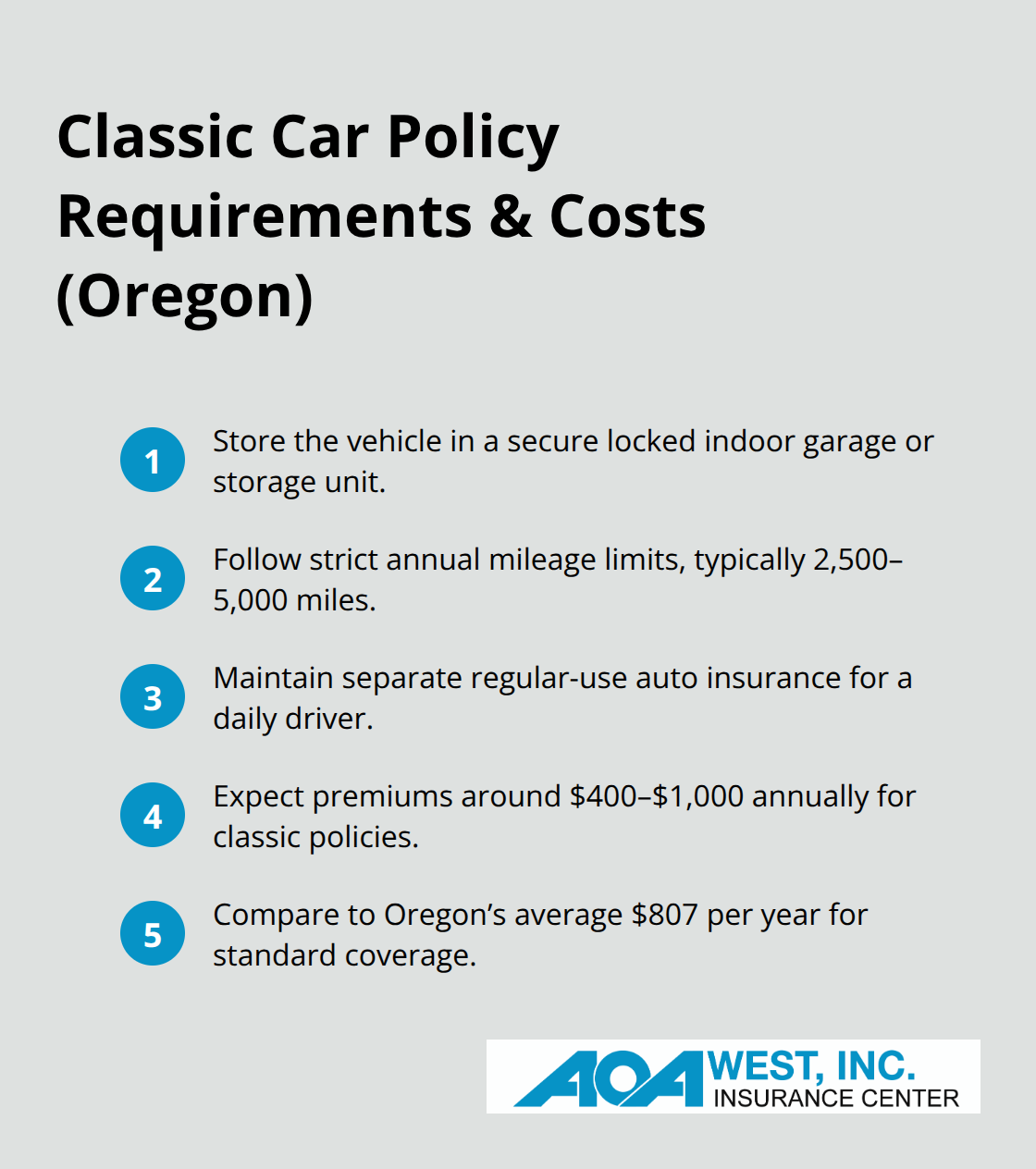
Classic car policies impose specific requirements that standard insurance ignores. Your vehicle must be stored inside a secure locked garage, barn, or rental storage unit-not in a driveway or carport. Most policies enforce strict annual mileage limits (typically between 2,500 and 5,000 miles per year), and exceeding these limits can void your coverage or reduce claim eligibility. You must also carry regular-use auto insurance on a daily driver if you own a classic car; insurers won’t cover you if your collector vehicle becomes your primary transportation. These restrictions exist because classic cars present lower risk when used as intended, which is why premiums typically range from $400 to $1,000 annually compared to the Oregon average of $807 per year for standard coverage.
Why Specialized Coverage Protects Your Investment
The real difference emerges when you file a claim. Standard policies calculate payouts based on market depreciation, which undervalues what you’ve invested in restoration, custom parts, and preservation. A classic car policy recognizes that your vehicle’s worth lies in its condition, rarity, and the work you’ve put into it-not in what a used-car guide says it’s worth. Insurers who specialize in collector vehicles understand that a restored classic often costs more to repair with original or authentic replacement parts than a newer car would cost with standard parts. This distinction matters enormously when you need to rebuild your car after damage. Your next step involves understanding what coverage options actually protect that investment and how to structure a policy that matches your specific collection and driving habits.
What Coverage Actually Protects Your Classic Car
Agreed Value Coverage: Protecting What Your Car Is Actually Worth
Agreed value coverage stands apart from standard auto insurance because it guarantees you’ll receive the full insured amount in the event of a total loss, regardless of market depreciation. When you and your insurer establish an agreed value upfront, that’s the amount you receive if your vehicle is totaled. This matters enormously in Oregon’s collector car market. Standard policies would pay based on depreciated value at claim time, potentially leaving you thousands short. Agreed value eliminates this gap entirely.
You avoid the fight with an adjuster over what your car is worth when you need it most. However, agreed value requires accuracy upfront. Misrepresenting your vehicle’s value or condition can result in claim denial, so provide detailed documentation of restoration work, original parts, and current condition when you apply. Most policies require annual reviews to adjust values as your collection appreciates, which is why working with an agent who tracks market values matters.
Comprehensive and Collision Coverage for Restoration Work
Comprehensive and collision coverage for collectors functions differently than standard auto policies because insurers factor in repair costs using original or authentic replacement parts rather than generic aftermarket alternatives. If your restored 1955 Ford F-100 sustains collision damage, the insurer covers repairs using parts that maintain the vehicle’s originality and value, not budget substitutes that would diminish what you’ve invested. This protection extends to custom modifications and restoration work, which standard policies typically exclude or undervalue.
Additional Riders Protect Your Entire Investment
Additional riders for restoration and custom parts fill gaps that standard coverage leaves open. Some policies offer coverage specifically for parts you’ve collected but haven’t yet installed, protecting your inventory of original components. Others cover tools and equipment stored in your garage for restoration work. These riders protect that investment separately from the vehicle itself.
Storage Location and Documentation Matter
Storage location accuracy becomes critical for claim approval. Misreporting where your car is kept can trigger claim denials, so confirm with your agent that your policy reflects your actual garage location, whether that’s a residential garage, rental storage unit, or climate-controlled facility. The difference between a policy that covers only the vehicle and one that protects your entire restoration investment often costs just $50 to $150 more annually, which is negligible compared to what you’d lose in an underinsured claim.
As you evaluate these coverage options, the next critical step involves selecting an insurance provider who understands collector vehicles and can navigate Oregon’s specific requirements for your collection.
How to Choose the Right Classic Car Insurance Provider in Oregon
Experience with Collector Vehicles Sets Specialists Apart
Finding the right insurance provider for your classic car requires more than comparing prices-it demands finding someone who understands collector vehicles deeply enough to structure coverage that actually protects your investment. Not all insurance agents grasp why a 1955 Ford F-100 restoration costs thousands more to repair than its market value suggests, or why agreed value coverage matters more than premium discounts. An agent unfamiliar with collector cars will steer you toward standard policies that save $200 annually but leave you thousands short in a claim. The difference between adequate protection and catastrophic underinsurance often comes down to whether your agent has genuine experience with classic vehicles.
When you call an agent, ask directly how many collector car policies they’ve written in the past year-anything under 20 suggests they treat classics as a side project rather than a specialty. Oregon-based agencies carry particular value because they understand state-specific regulations around antique vehicle registration, which requires proof that your car is maintained as a collector’s item and used only for exhibitions, parades, and club activities. An agent familiar with Oregon’s requirements won’t waste your time applying for coverage you don’t qualify for.
Independent Agencies Offer Broader Coverage Options
An independent agency works with multiple carriers specializing in collector cars, which means you’re not limited to one insurer’s narrow eligibility requirements or coverage gaps. Agencies representing only one carrier can’t adapt when that carrier won’t cover your specific vehicle type or driving patterns. By working with multiple insurance companies, you gain access to personalized guidance and clear side-by-side comparisons so you can choose tailored protection with confidence.
Compare Quotes Across Multiple Carriers
Comparing quotes across carriers reveals stark differences in how each insurer structures collector car protection. Request quotes from at least three carriers, and when comparing, don’t just look at annual premium-examine what each policy actually covers regarding agreed value calculations, storage requirements, mileage allowances, and repair parts standards. One carrier might charge $600 annually with a 5,000-mile limit and require original parts for repairs, while another charges $750 but allows 7,500 miles and permits quality reproductions. The cheaper option isn’t automatically better if it restricts your driving or forces cost-cutting repairs that damage your car’s value.
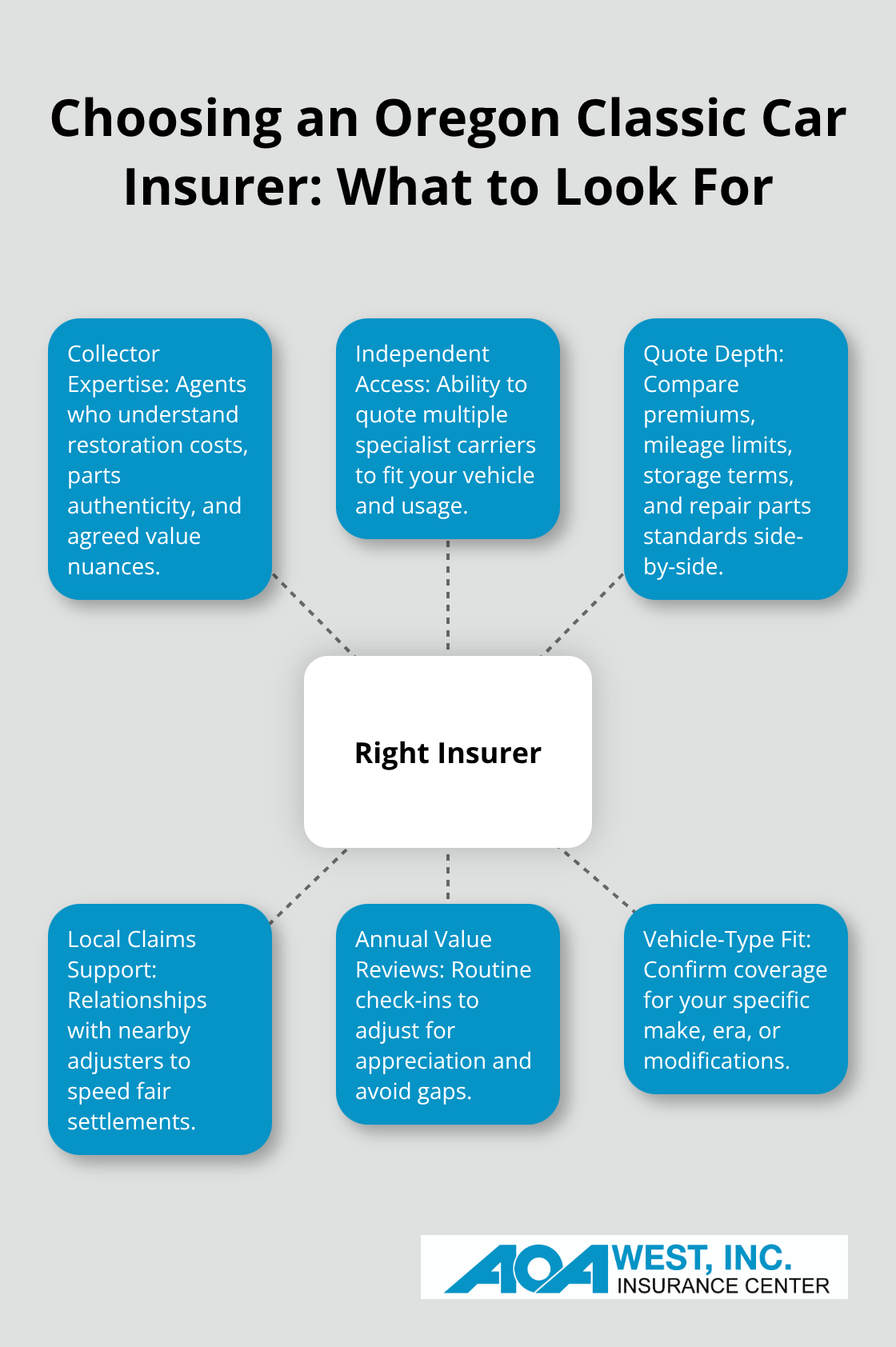
Ask each carrier whether they offer annual policy reviews to adjust values as your collection appreciates-this matters enormously because collector vehicles often appreciate or hold value differently than standard cars, and outdated valuations create underinsurance gaps. Verify whether each carrier covers your specific vehicle type, because some specialize in American classics while others focus on European imports or modified hot rods.
Local Support Determines Claims Experience
During claims, local support determines how quickly you receive payment and whether the process feels adversarial or collaborative. An agent with established relationships with local claims adjusters can often resolve disputes faster than a national carrier’s phone line. Ask your agent about their experience handling claims for vehicles similar to yours-not just whether they’ve handled claims, but whether their clients received fair settlements without fighting over repair costs or parts authenticity. The agent who understands your local market and has built relationships with adjusters in the Tigard area will advocate for you when disputes arise over repair standards or valuation.
Final Thoughts on Protecting Your Collection
Document your vehicle’s actual condition and value with photographs, restoration receipts, and professional appraisals if your car exceeds $25,000 in value. This documentation becomes your defense against claim denials and underpayment when adjusters scrutinize whether your stated value matches the evidence you provide. Detailed records eliminate disputes over what your car was worth at the time of loss and protect your investment from the moment you purchase a classic car policy Oregon.
Review your policy annually as your collection grows or appreciates, since classic cars often gain value through market demand or completion of restoration work. Oregon’s collector car market has seen steady appreciation over the past five years, particularly for well-maintained American classics and European imports, which means your $35,000 car from three years ago might be worth $42,000 today. Many owners set their coverage once and forget it, creating a dangerous gap between what their car is actually worth and what their policy would pay in a total loss.
Work exclusively with an agent who understands collector needs deeply enough to ask the right questions about your specific vehicle, driving patterns, and restoration plans. A specialist will ask whether you plan to drive your car to shows or only transport it on a trailer, whether you’re still completing restoration work, and whether your collection might expand-these details shape whether your coverage actually protects your investment or leaves you exposed. We at AOA West, Inc. have guided Tigard-area collectors through these decisions since 1979 as a family-owned independent agency, and we can structure coverage that matches your specific collection and review it annually as your vehicles appreciate.
Disclaimer: The information provided in this blog is for general informational purposes only and does not constitute legal, financial, or insurance advice. Coverage options, terms, and availability may vary. Please consult with a licensed professional for advice specific to your situation. Artificial intelligence may have been used to generate text and images in some blog articles.