
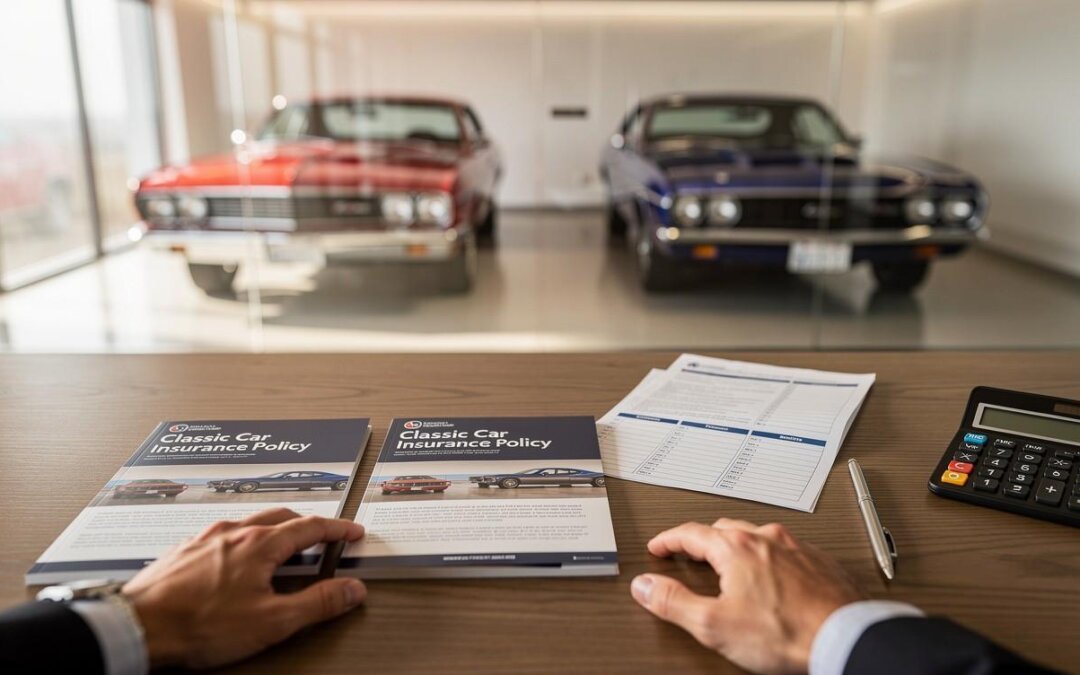
Your classic car deserves protection that standard auto insurance simply doesn’t provide. Classic car policy differences matter more than most owners realize, especially when your vehicle represents years of investment and passion.
At AOA West, Inc., we help Tigard collectors understand exactly how specialty coverage works. The right policy protects both your vehicle’s true value and your peace of mind.
How Agreed Value and Usage Limits Change Your Coverage
Why Agreed Value Protects Your Investment
Standard auto insurance uses actual cash value, which means your insurer pays what your car is worth on the day it’s damaged or totaled. For a classic car worth $45,000, this approach fails because market value fluctuates constantly and rarely reflects what you actually paid or what restoration cost you. Agreed value coverage eliminates this problem entirely.
You and your insurer agree on your vehicle’s worth upfront, and that’s what you receive if a total loss occurs. This matters tremendously in the collector car market, where a well-maintained 1967 Mustang Fastback could appreciate according to the Hagerty Price Guide. With agreed value, you avoid depreciation arguments when you file a claim.
How Usage Restrictions Lower Your Premiums
Classic car policies operate under completely different usage restrictions than standard coverage. Most collectors don’t drive their vehicles daily, and insurers recognize this reality. Typical mileage limits range from 2,500 to 5,000 miles annually, compared to the unlimited mileage assumed in standard policies.
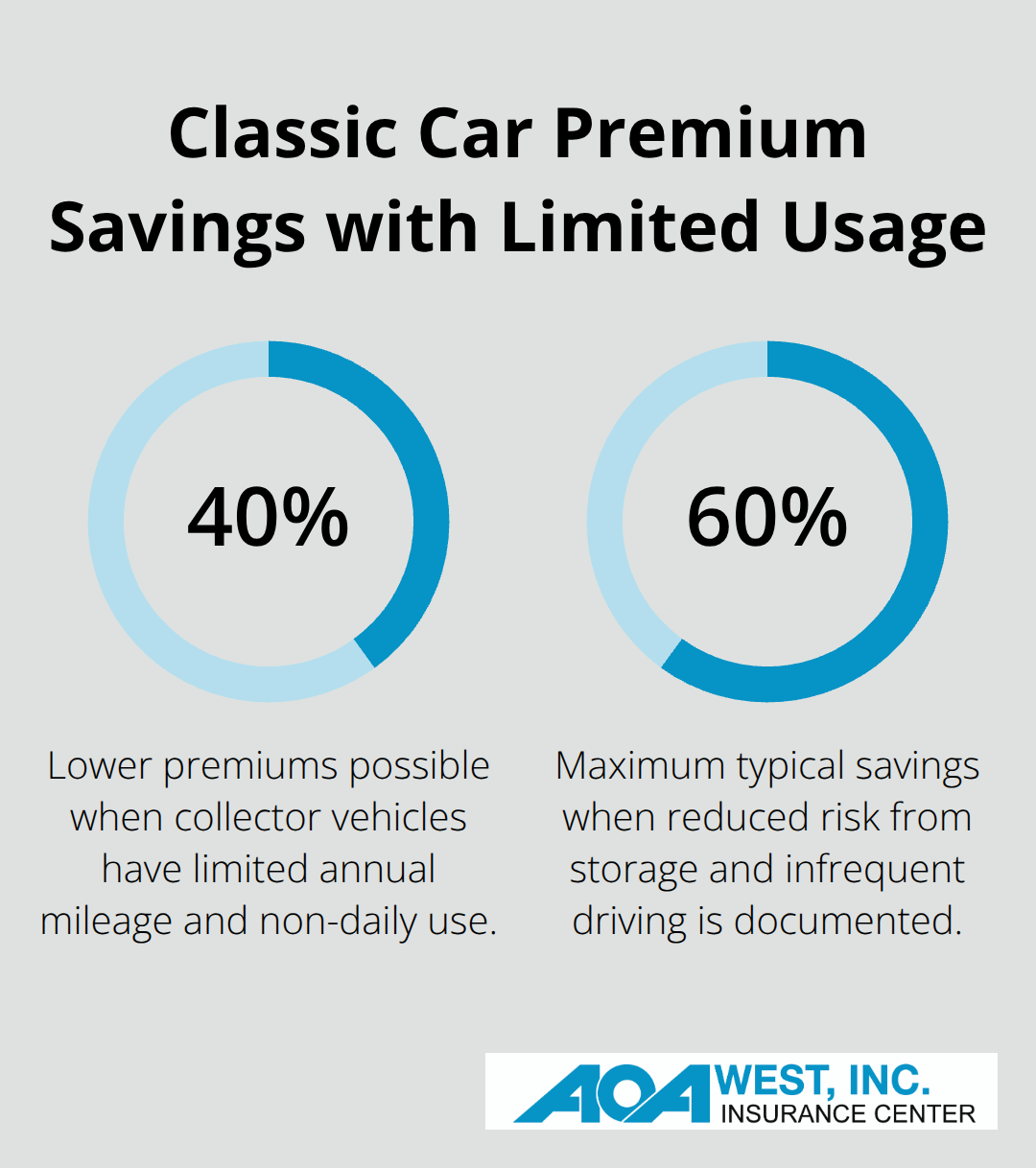
This lower usage profile reduces risk significantly, which is why classic car premiums can be 40-60% lower than standard auto insurance for the same vehicle value. The difference reflects actual driving patterns-a collector vehicle stored in a climate-controlled garage presents far less exposure than a commuter car on the road five days a week.
What Underwriters Actually Examine
The underwriting process for classic cars differs fundamentally from standard auto insurance. Specialists examine your vehicle’s condition, maintenance records, and storage setup rather than just running a VIN check. They want proof that you’re a serious collector who maintains your investment properly.
A stored, well-maintained 1982 Chevrolet Corvette presents entirely different risk than a daily driver, and that distinction shapes both your coverage options and your costs. This specialized evaluation means your policy reflects the actual care you put into your vehicle.
Understanding these three pillars-agreed value, usage limits, and specialized underwriting-positions you to make informed decisions about which coverage options actually fit your collection. The next section explores the specific add-ons that protect different aspects of your classic car investment.
Key Coverage Options for Classic Cars
Spare Parts Coverage Protects Your Component Investment
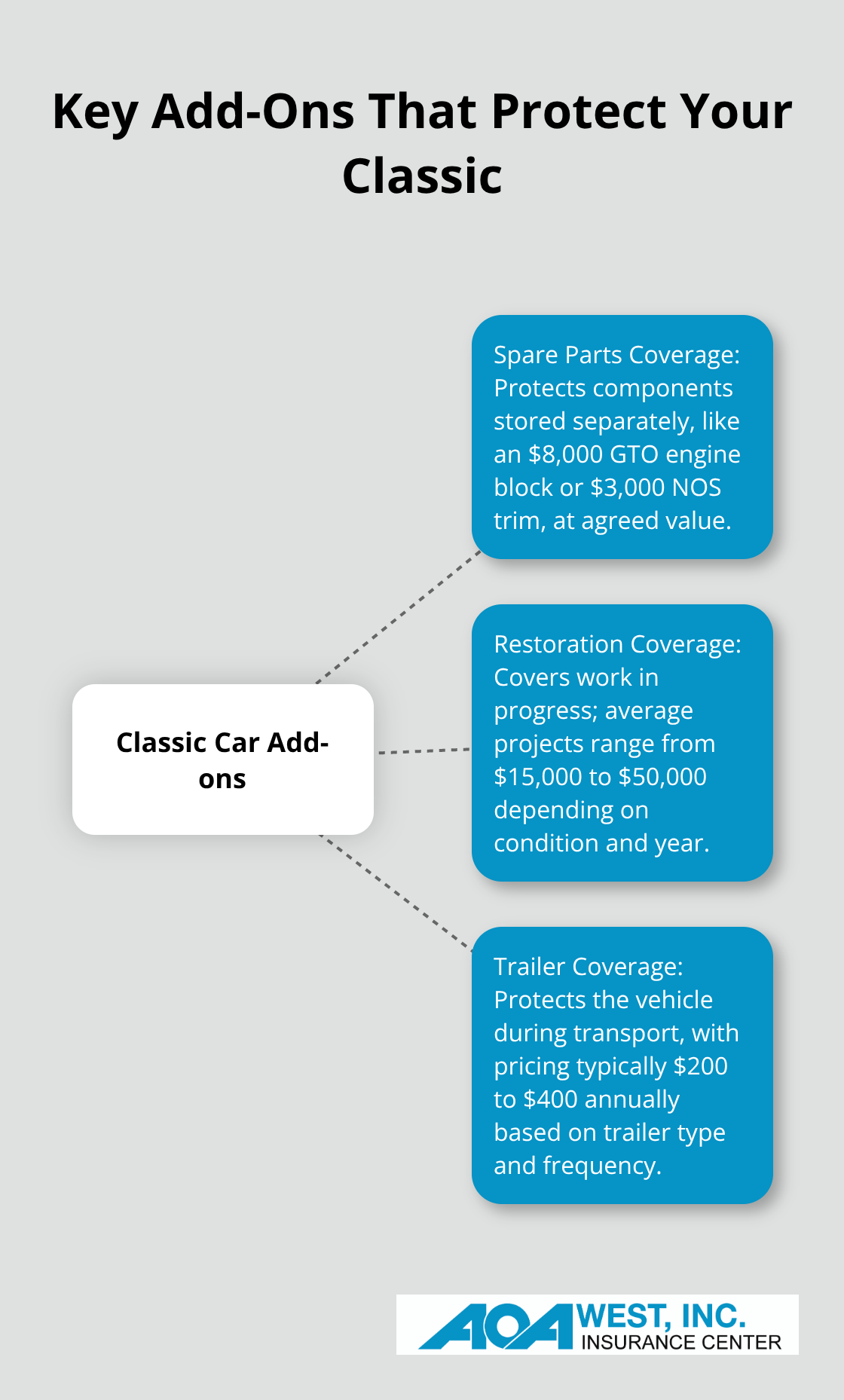
Your collection likely includes valuable components stored separately from your vehicles. If you’ve invested $8,000 in a rare 1971 Pontiac GTO engine block or $3,000 in NOS (new old stock) trim pieces, standard insurance won’t cover those parts if theft or fire strikes your storage space. Spare parts coverage reimburses you for those components at agreed value, meaning you receive what you actually paid, not what an adjuster thinks they’re worth.
Tigard collectors frequently overlook this protection until a loss occurs. The financial impact can be substantial when you’ve accumulated original components over years of collecting.
Restoration Coverage Protects Work in Progress
Classic cars are ongoing projects, not finished products sitting untouched. The average collector spends $15,000 to $50,000 on restoration work depending on the vehicle’s condition and year, according to Hagerty’s collector car data. If your 1968 Chevelle is mid-restoration when a covered loss occurs, standard policies either deny the claim or pay only the vehicle’s pre-restoration value.
Restoration coverage protects your invested labor and materials by covering the work in progress. This matters tremendously for owners who’ve already committed $20,000 into a frame-off restoration when disaster strikes. Without it, you absorb the entire loss on work that’s not yet complete.
Trailer Coverage Ensures Transport Protection
Your vehicle faces real exposure during transport to shows, auctions, or storage facilities. Whether you’re hauling your classic to a show in Portland or shipping it across the country, dedicated trailer coverage protects your collector car from the moment it leaves your garage. Most standard policies exclude transport entirely, leaving your investment vulnerable during the journey.
Specialized carriers understand that transport represents genuine risk, and they price this coverage accordingly-typically $200 to $400 annually depending on trailer type and transport frequency. This protection covers your vehicle while it’s in transit, not just while it sits in your garage.
Building Your Complete Protection Strategy
These three coverage options address the specific vulnerabilities that standard auto policies ignore. Spare parts, restoration work, and transport all represent significant financial exposure for collectors, yet they fall outside conventional coverage. The right combination of add-ons transforms your policy from basic protection into comprehensive coverage that matches your actual investment and how you use your vehicles.
The decisions you make about these add-ons directly impact what happens when something goes wrong. Understanding which mistakes collectors make when selecting policies helps you avoid costly gaps in your coverage.
Common Mistakes When Choosing Classic Car Policies
Underestimating Your Vehicle’s True Value
Most Tigard collectors undervalue their classic cars when applying for specialty coverage, and this single mistake creates catastrophic claim problems later. You might own a 1972 Chevrolet Chevelle SS that you purchased for $28,000 five years ago, but if you haven’t tracked restoration investments, parts acquisitions, and market appreciation, you could easily insure it for $35,000 when it’s actually worth $52,000 today. When total loss occurs, agreed value coverage pays exactly what you specified at policy inception-not what the vehicle is actually worth. The difference between your stated value and real value means you absorb that gap entirely out of pocket.
Classic muscle cars appreciate significantly over time, yet most owners fail to adjust their coverage annually to match this growth. You need a detailed inventory of every dollar spent on restoration, every original part installed, and current market comparisons for your specific vehicle year and condition. Without documentation, your insurer has no reason to agree to higher values at renewal, leaving you perpetually underinsured.
Selecting Standard Auto Insurance Instead of Specialty Coverage
Standard auto insurance instead of specialty classic car coverage represents a decision that will haunt you if anything happens. Standard policies explicitly exclude collector vehicles from coverage in many cases, or they apply depreciation schedules designed for daily drivers rather than preserved investments. A standard policy might pay $15,000 for a total loss on that same Chevelle because it calculates value based on generic market data rather than your vehicle’s actual condition, modifications, and collector status.
Collectors who save $300 annually on premiums by using standard coverage often face $20,000+ losses when claims get denied or underpaid. The short-term savings evaporate instantly when you file a claim and discover your policy doesn’t actually protect your investment. Specialty coverage costs more upfront, but it reflects the reality of what your classic car actually represents-a valued asset, not a depreciating daily driver.
Failing to Document Modifications and Upgrades
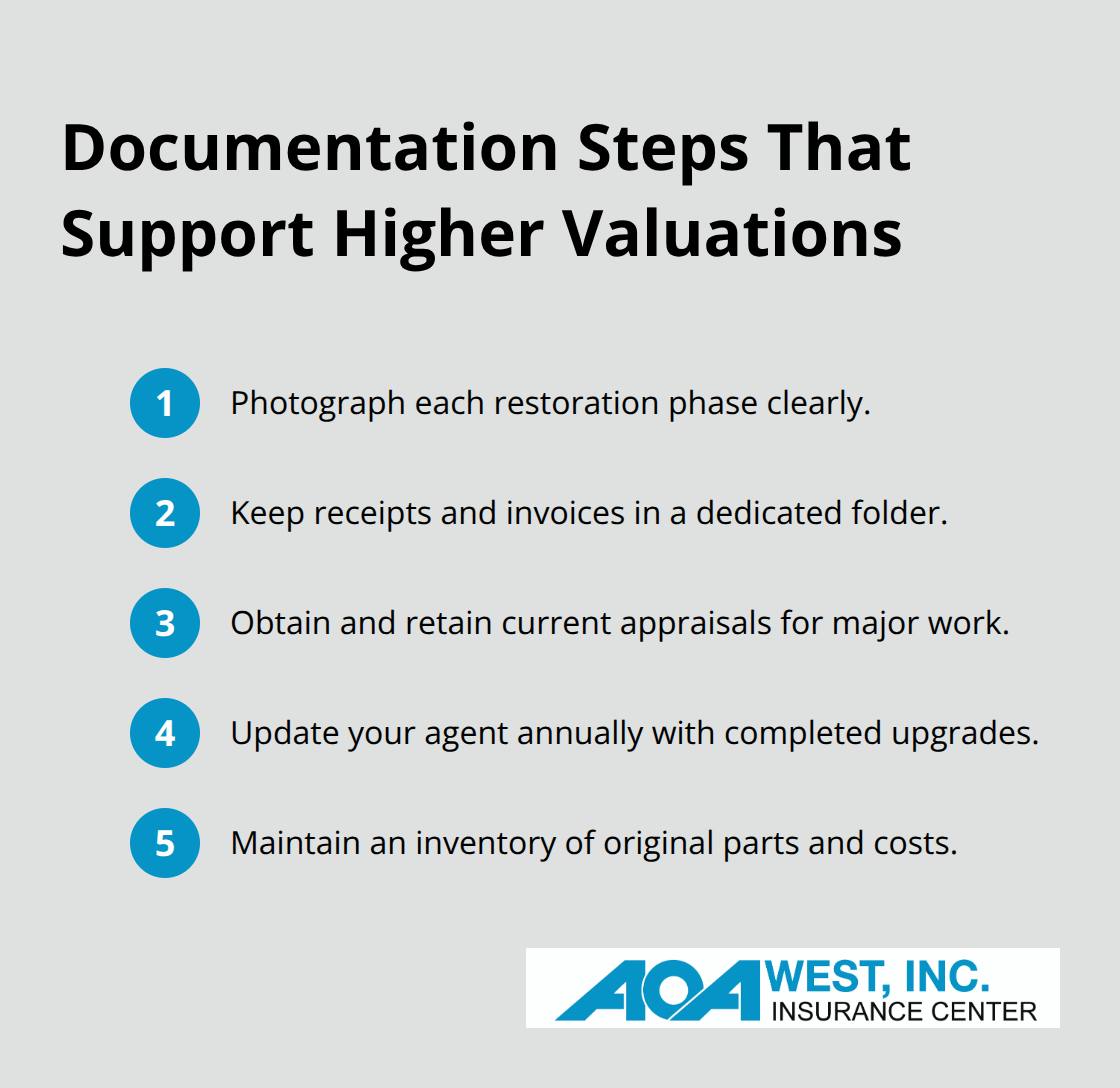
Failing to document modifications and upgrades leaves you vulnerable when you file a claim because insurers need concrete evidence that your vehicle justifies higher valuation. If you’ve installed a $6,000 frame-off restoration, original NOS (new old stock) trim, or a period-correct engine rebuild, you must provide receipts, photos during installation, and current appraisals. Without this documentation, adjusters treat your upgrades as standard equipment worth minimal value.
Start maintaining a restoration journal now-photograph each project phase, file receipts in a dedicated folder, and update your agent annually with completed work. This documentation becomes your insurance policy’s foundation, protecting your actual investment rather than leaving coverage gaps that standard policies would never fill anyway. When you work with a local independent agent who understands collector vehicles, they help you organize this information and present it to insurers in ways that support higher valuations.
Final Thoughts
Classic car policy differences fundamentally shape how well your investment stays protected when loss occurs. Agreed value coverage, usage restrictions, and specialized underwriting create a framework that standard auto insurance cannot match, while add-ons like spare parts, restoration, and trailer coverage fill gaps that collectors face constantly. The mistakes we covered-undervaluing your vehicle, selecting standard policies, and skipping documentation-represent real financial exposure that happens to Tigard collectors every year.
Working with specialists who understand collector vehicles transforms your coverage from generic protection into tailored solutions that reflect your actual investment. Independent agents who focus on classic cars know which carriers offer the best terms for your specific situation and help you document your investment properly from day one. Your 1967 Mustang isn’t just transportation-it’s an asset that warrants protection matching its actual value and how you use it.
Contact AOA West, Inc. to discuss your classic car protection with agents who understand the collector vehicle market in Oregon. Our local team reviews your current coverage, identifies gaps, and delivers side-by-side comparisons so you see exactly what each policy covers and costs. The right policy protects far more than standard coverage ever could.
Disclaimer: The information provided in this blog is for general informational purposes only and does not constitute legal, financial, or insurance advice. Coverage options, terms, and availability may vary. Please consult with a licensed professional for advice specific to your situation. Artificial intelligence may have been used to generate text and images in some blog articles.