
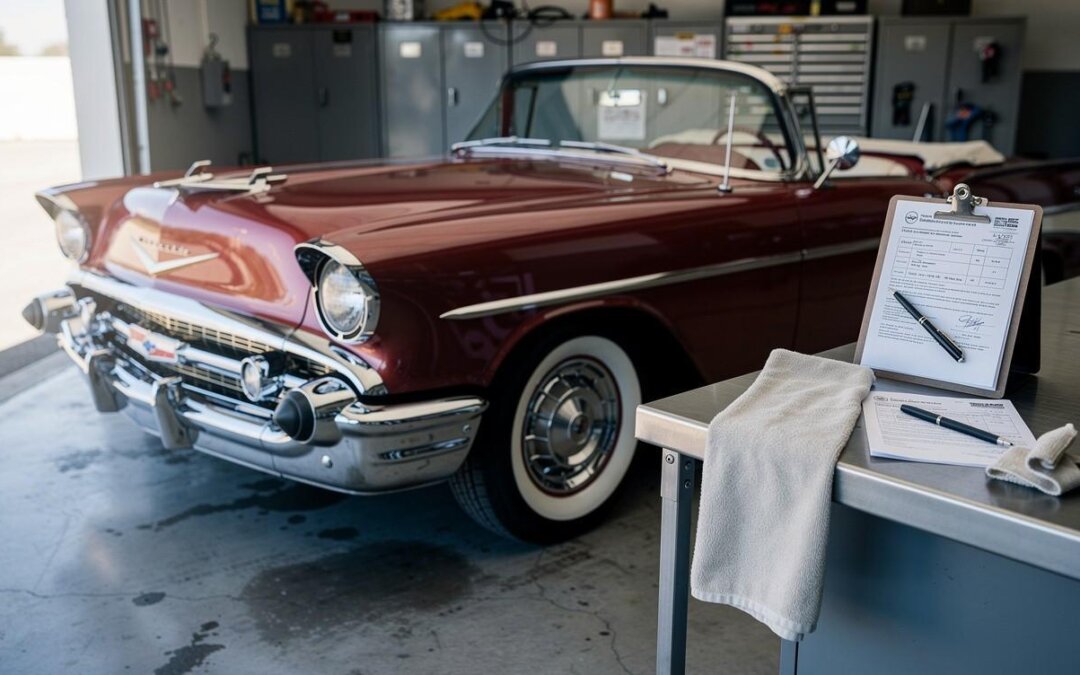
Your classic car is more than transportation-it’s an investment that deserves specialized protection. Standard auto policies don’t account for the unique value and care requirements of collector vehicles, which is why antique auto insurance in Oregon exists.
At AOA West, Inc., we work with Tigard-area collectors who understand that proper coverage makes the difference between peace of mind and financial loss. This guide walks you through the coverage options, valuation methods, and maintenance practices that keep your classic vehicle protected year-round.
Understanding Antique and Collector Car Values
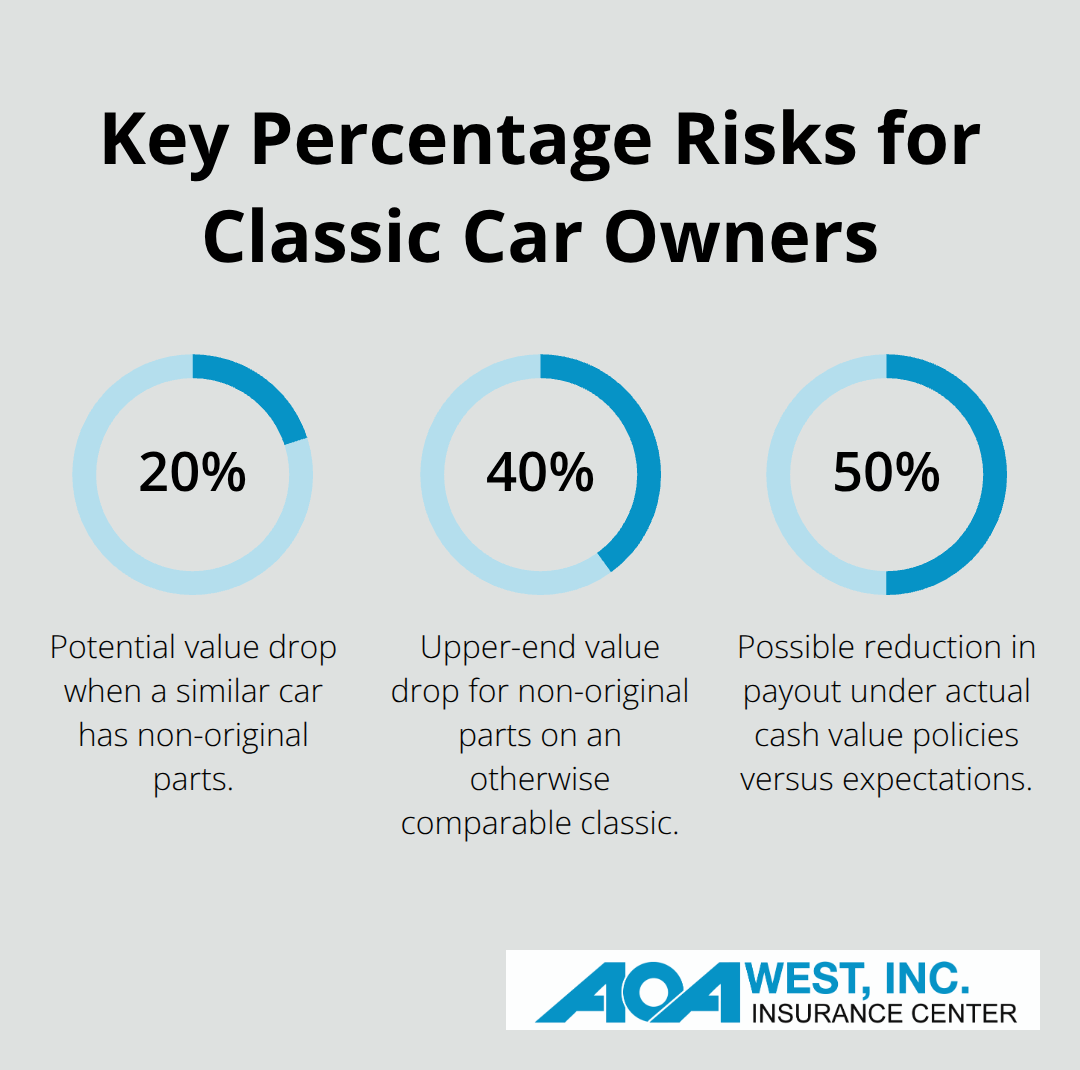
Insurance companies value antique cars differently than standard vehicles, and understanding this process directly affects your coverage and claim outcomes. Most insurers start by examining the vehicle’s condition, mileage, maintenance history, and market comparables from auction results and collector car databases like NADA Guides or Hagerty’s valuation tools. A 1967 Chevrolet Corverolet Corvette Stingray in excellent condition might fetch $80,000 to $120,000 depending on originality and provenance, but a similar car with non-original parts could drop 20-40% in value. Insurance companies in Oregon require documentation that supports whatever value you claim, and this is where most collectors make mistakes by underestimating or overestimating their vehicles without evidence.
Agreed Value Protects What Your Car Actually Costs
Agreed value coverage is the right choice for collector cars, and frankly, standard actual cash value policies leave you exposed. You and your insurer settle on a specific amount before a loss occurs, which eliminates disputes when you file a claim. If your 1972 Porsche 911 is valued at $95,000 and you have agreed value coverage, you receive $95,000 if it’s totaled, regardless of what the market says that week. Actual cash value coverage, by contrast, pays whatever the insurer decides your car is worth at the time of loss, often resulting in 30-50% less than you expected. For Oregon collectors, agreed value is non-negotiable because classic car values fluctuate based on market trends, and you need certainty.
Documentation Separates Legitimate Claims from Disputes
Insurance companies demand specific paperwork before they’ll agree to any value, and skipping this step guarantees problems later. Professional appraisals from certified mechanics or appraiser organizations carry the most weight, typically costing $300-$600 but providing documentation insurers accept without question. Maintenance records, restoration invoices, and photographs of your vehicle’s condition create a detailed history that supports your claimed value. For vehicles worth more than $50,000, insurers almost always require a professional appraisal; attempting to insure a valuable classic without one means your claim will likely face denial or significant reduction.
What Coverage Options Fit Your Collection
Once you establish your vehicle’s value through proper documentation, you need to select coverage that matches both your car and how you use it. Comprehensive and collision protection work differently for collector vehicles than they do for daily drivers, and the distinctions matter significantly when you file a claim.
Coverage Options for Classic Cars in Oregon
Comprehensive and Collision Protection Work Differently for Collector Vehicles
Comprehensive and collision coverage for collector vehicles operates fundamentally differently than it does for your daily driver, and most Oregon collectors misunderstand how these policies function when a loss occurs. Standard auto policies calculate payouts using actual cash value, which means depreciation eats into your claim regardless of how well you maintain your car. Collector car policies, however, operate on agreed value coverage when you select that option, guaranteeing you’ll receive the full amount you established during underwriting regardless of market conditions at the time of loss.
This distinction matters enormously because a 1955 Chevrolet Bel Air worth $65,000 today might appreciate to $75,000 next year, but if damage occurs before that appreciation happens, agreed value coverage still pays the $65,000 you documented. Comprehensive coverage protects against theft, vandalism, weather damage, and animal collisions, while collision coverage handles accidents with other vehicles or objects. For cars stored most of the year in Oregon’s wet climate, comprehensive is essential since moisture damage, mold, and theft risk increase during storage months.
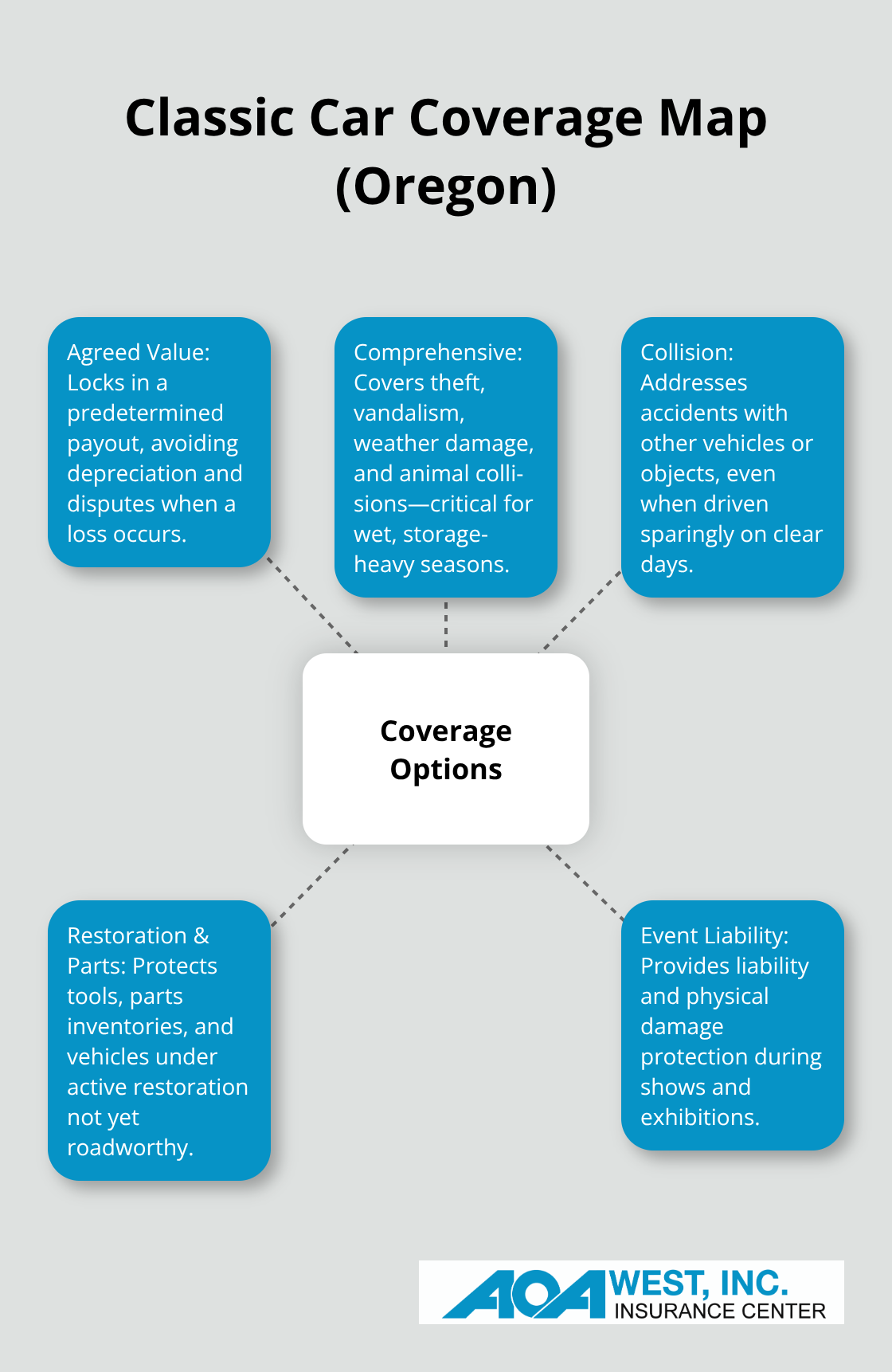
Collision coverage matters less for show cars driven sparingly on clear days, but remains important if you occasionally drive your classic on public roads where accident risk exists, even at reduced speeds.
Specialty Coverage Addresses Restoration and Parts Exposure
Specialty coverage for restoration work and high-value parts addresses gaps that standard policies leave open, and this is where many collectors face unexpected financial exposure. If you’re restoring a vehicle and parts sit in your garage or workshop, standard homeowners insurance won’t cover them because they’re not permanently attached to your residence. Specialized collector car policies offer coverage for parts inventories, tools used in restoration, and vehicles under active restoration that aren’t yet roadworthy.
Coverage limits for parts inventories range from $10,000 to $100,000 or more, protecting your investment while work progresses. Documentation of parts (receipts, photographs, serial numbers) helps establish value and speeds up claims if theft or damage occurs.
Liability Protection for Show Events and Exhibitions
Liability protection for show events and exhibitions becomes critical when your classic appears at Concours events, car shows, or exhibitions throughout the Portland metro area and beyond. Standard auto policies exclude coverage for vehicles on display or being shown, meaning you’re completely unprotected if someone is injured near your car at an event or if your vehicle damages someone else’s property while parked at a show. Show coverage typically costs $15 to $30 per event and provides both liability and physical damage protection while your car is exhibited.
Many collectors attend 4 to 8 events annually, making event-by-event coverage more economical than adding permanent show coverage to their policy. Some insurers offer annual show coverage for $150 to $300, which works better if you participate in frequent exhibitions. AOA West, Inc. helps collectors throughout the Tigard area select the right event coverage structure, ensuring protection whether your classic appears at one show or multiple events each season.
How to Protect Your Classic Car Through Oregon’s Seasons
Storage Strategy for Oregon’s Wet Climate
Oregon’s wet winters and variable storage conditions demand a protection strategy that extends beyond standard maintenance. Most collectors in the Tigard area store their vehicles for 6-8 months annually, which exposes your classic to moisture damage, battery drain, fuel degradation, and corrosion risks that far exceed what happens during driving months. The Oregon State Climate Office reports that the Willamette Valley receives 43-45 inches of annual rainfall, with most precipitation occurring between October and March, making climate-controlled storage essential for protecting your vehicle from extreme temperatures and humidity.
Unheated garages create condensation during temperature swings, promoting rust on metal components and mold on upholstery and carpeting. Your insurance policy protects against theft and flood insurance damage, but only if you maintain the vehicle properly beforehand.
Pre-Storage Maintenance Tasks
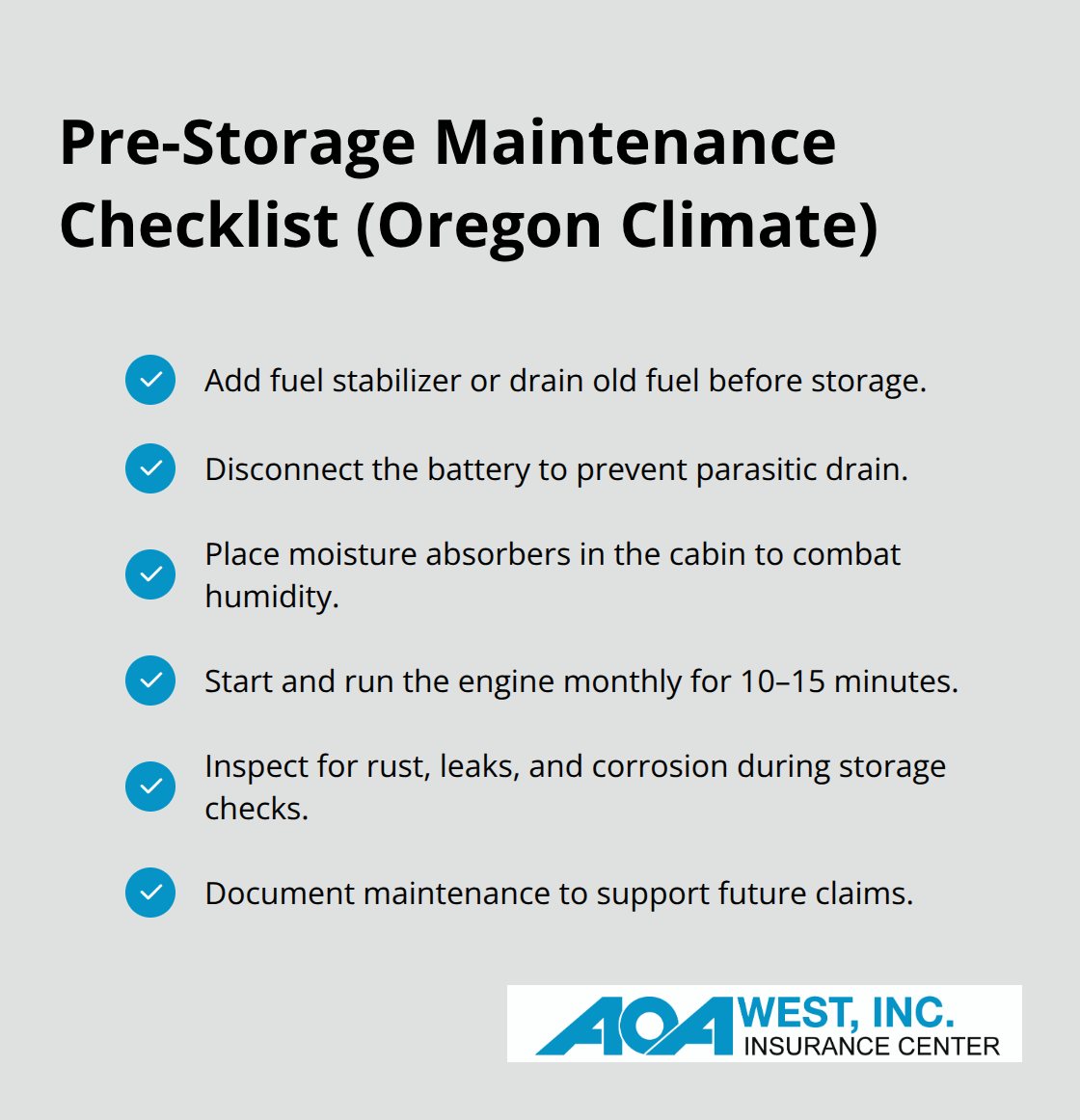
Drain old fuel or add fuel stabilizer before storage, disconnect the battery to prevent drain, and place moisture-absorbing products like calcium chloride in the cabin to combat humidity. Check your vehicle monthly even during storage, starting the engine and running it for 10-15 minutes to circulate oil and prevent fuel line corrosion. This monthly attention costs nothing but prevents $5,000-$15,000 in restoration work when you discover rust or mechanical problems in spring.
Professional Inspections and Documentation
Professional inspections before and after storage seasons protect both your vehicle and your coverage. Schedule a detailed inspection with a certified mechanic in September before storage begins and again in March as you prepare for driving season, documenting fluid levels, battery condition, tire pressure, and any emerging rust or damage. These inspections create records that support your agreed value claim if damage occurs and help you catch problems early when repairs remain inexpensive.
Maintaining Accurate Appraisals
Appraisals every 2-3 years maintain accuracy as your classic appreciates or depreciates based on market conditions and restoration work completed. If you invest $20,000 in restoration over two years, your vehicle’s value likely increases significantly, and your original $65,000 agreed value coverage may now undervalue your investment. Many collectors skip reappraisals, then discover during a claim that their coverage no longer matches their vehicle’s actual worth. Schedule appraisals after major restoration work or every 36 months if your vehicle isn’t undergoing active work, keeping your protection aligned with your investment.
Final Thoughts
Specialized antique auto insurance in Oregon protects what standard policies won’t, and the difference becomes painfully obvious when you file a claim. Your classic car represents years of investment, restoration work, and personal attachment that no generic auto policy acknowledges. Agreed value coverage, proper documentation, and seasonal maintenance strategies work together to keep your collector vehicle protected whether it sits in storage or appears at a show.
We at AOA West, Inc. have worked with Tigard-area collectors since 1979, helping them navigate the specific coverage needs that classic cars demand. As an independent agency, we compare multiple carriers to find policies that match your vehicle’s value and how you actually use it, whether that means show events, occasional drives, or long-term storage. Our local expertise means we understand Oregon’s weather challenges, the collector car community in the Portland metro area, and the documentation requirements that insurers demand before they’ll approve your claimed value.
Contact AOA West, Inc. to discuss your collection and receive specific quotes from carriers that specialize in antique auto insurance in Oregon. Bring your appraisals, maintenance records, and photographs so we can present your vehicle’s value accurately and walk you through coverage options that match your needs.
Disclaimer: The information provided in this blog is for general informational purposes only and does not constitute legal, financial, or insurance advice. Coverage options, terms, and availability may vary. Please consult with a licensed professional for advice specific to your situation. Artificial intelligence may have been used to generate text and images in some blog articles.