
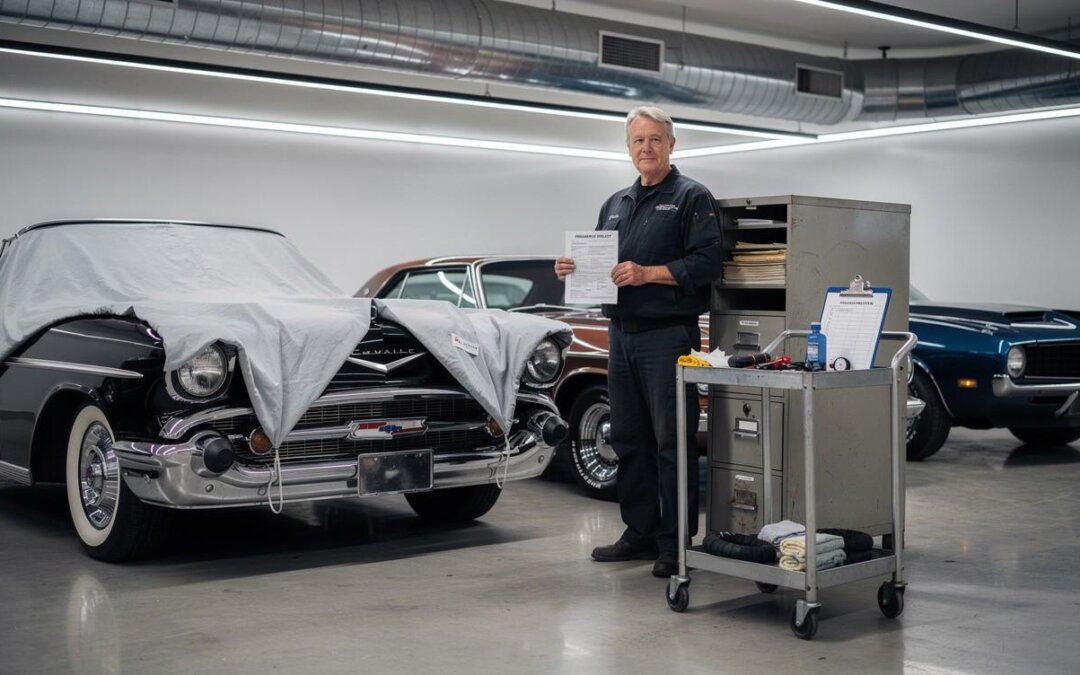
Your classic car is an investment worth protecting. At AOA West, Inc., we know that standard auto insurance leaves collectors vulnerable, which is why classic car storage coverage in Oregon exists as a specialized solution.
Storage brings unique risks-from weather damage to theft-that regular policies simply don’t address. The right coverage makes all the difference between peace of mind and financial loss.
What Classic Car Storage Coverage Actually Protects
Coverage That Standard Policies Ignore
Classic car storage coverage in Oregon protects what standard auto insurance refuses to touch. While a typical policy covers liability and collision on the road, it abandons your car the moment you park it permanently in a garage or storage unit. Storage-specific coverage addresses the real threats: comprehensive protection against fire, theft, vandalism, and weather damage while your vehicle sits stationary. Oregon’s damp winters and wildfire season create specific environmental pressures that standard policies simply ignore.
Agreed Value: The Real Difference
Agreed value coverage becomes the centerpiece of proper storage protection-it pays the full appraised value of your classic car in a total loss, not the depreciated amount an adjuster calculates. This matters enormously. A 1967 Mustang insured for $45,000 under agreed value receives the full $45,000 if destroyed by fire, whereas actual cash value might pay only $28,000 after depreciation calculations.
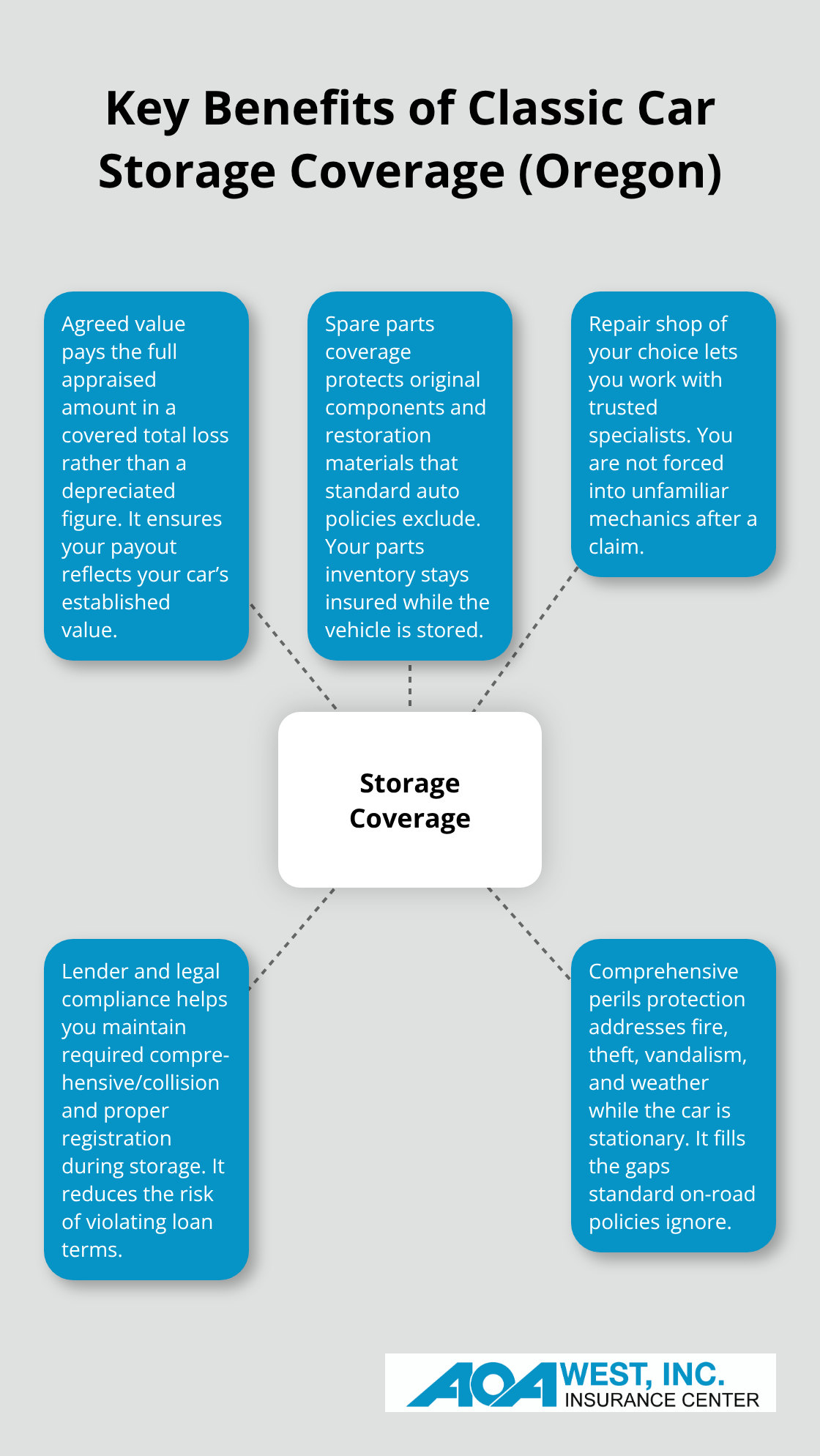
Storage-focused policies also include spare parts coverage, which standard auto insurance excludes entirely, and they offer repair-shop-of-your-choice provisions so you’re not forced to use unfamiliar mechanics.
Lender Requirements and Legal Obligations
Many Oregon collectors overlook that their lienholders-if financing is involved-typically require comprehensive and collision coverage at all times, even during storage, so dropping coverage entirely can violate loan terms and create legal exposure. Oregon regulations require that your stored classic remain properly registered and that you maintain liability coverage meeting state minimums of $25,000 per person, $50,000 per crash, and $20,000 for property damage, though these minimums barely scratch the surface for a prized collection.
Storage Setup and Climate Protection
Special interest registration for vehicles 25 years or older helps align your plates with storage status, and some collectors use antique registration as a permanent option once drivers reach 25 years old. The practical requirement is that your classic must sit in a locked, enclosed facility-not exposed in a driveway-to qualify for most storage policies and to satisfy lender requirements. Tigard storage facilities average about $125 per month for climate-controlled indoor units, well below the national average of $145, making it economically feasible to store properly. Climate-controlled storage stabilizes temperature and humidity, preventing rust, seal deterioration, and finish damage that plague vehicles stored in uncontrolled outdoor spaces.
Active Restoration and Ongoing Protection
If you’re restoring your classic, active restoration coverage keeps your vehicle insured throughout the work-in-progress phase, protecting your investment while the car sits partially disassembled. The specific storage type you choose-whether climate-controlled indoor, covered outdoor, or open outdoor-directly affects both your premium and the actual protection your collection receives, which is why understanding your policy differences matters before you sign any policy.
Choosing the Right Storage and Coverage for Your Collection
Climate-Controlled Storage Sets the Standard
Climate-controlled indoor storage stands as the gold standard for Oregon collectors, and the numbers justify the investment. Tigard facilities average climate-controlled units at approximately $121 per month. A standard 10-by-20-foot unit costs around $316 monthly in Tigard, while a 10-by-30-foot space runs approximately $358 per month and accommodates two average-sized cars side by side. Oregon’s damp winters and humidity fluctuations wreak havoc on uncontrolled storage, causing rust on metal components, deterioration of rubber seals, and finish damage that can cost thousands to repair.
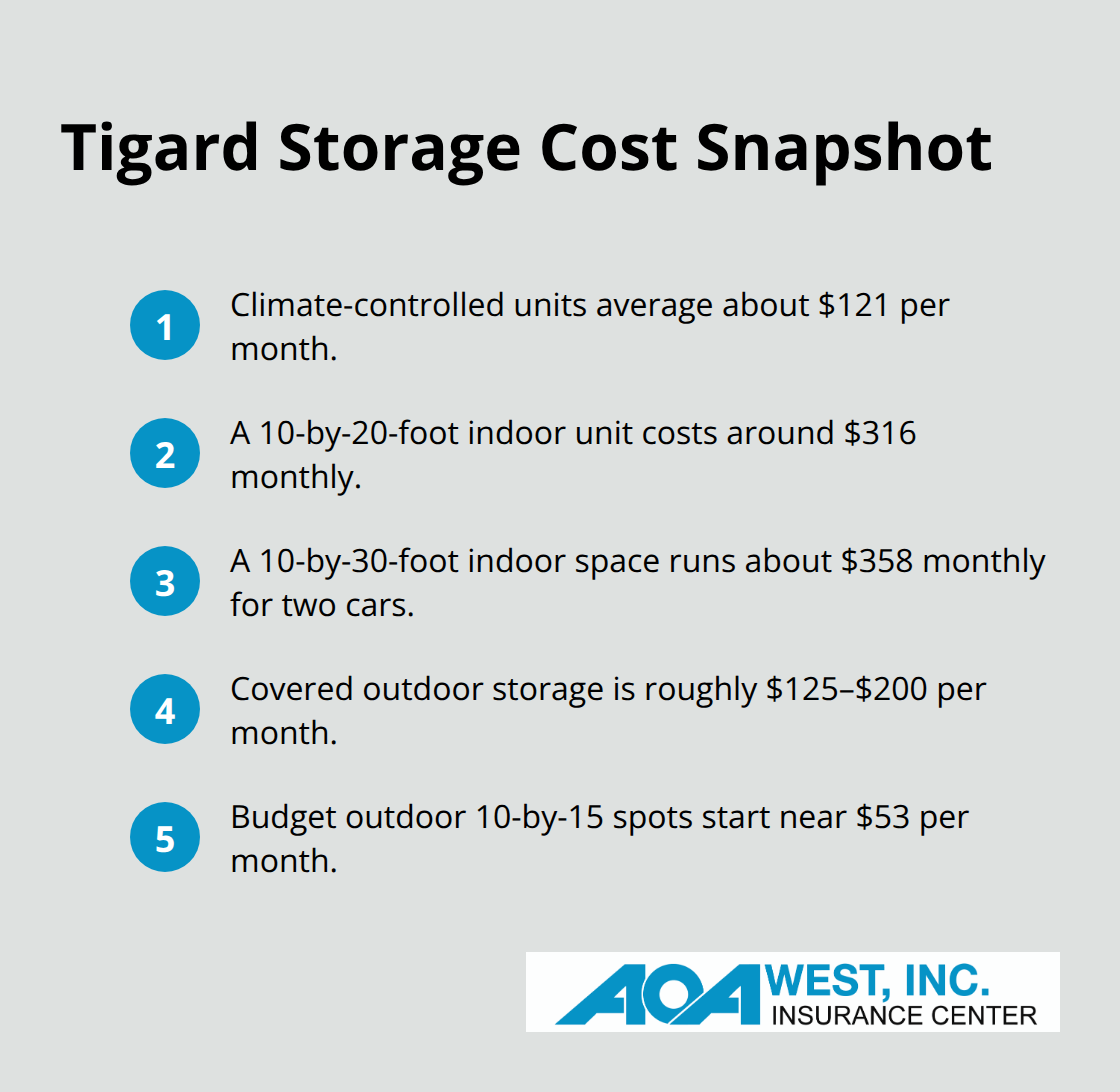
Climate control stabilizes temperature and humidity year-round, which is why collectors with serious investments should refuse outdoor options. Covered outdoor storage runs cheaper at around $125 to $200 monthly but exposes your classic to sun damage and precipitation, while budget outdoor spaces start near $53 per month for a 10-by-15-foot spot and offer virtually no protection.
Why Outdoor Storage Falls Short
Open outdoor storage creates false economy. Your classic sits exposed to Oregon’s intense sun, heavy rain, and temperature swings that accelerate deterioration. A vehicle stored outdoors for two years can suffer rust damage equivalent to five years of normal use, and that damage compounds repair costs far beyond what you saved on storage fees. The cheapest option rarely protects the most valuable asset.
Agreed Value vs. Actual Cash Value: The Critical Distinction
Agreed value coverage and actual cash value represent fundamentally different approaches to protecting your investment, and the distinction determines whether you recover your car’s true worth or face financial devastation. Agreed value pays the full appraised amount you and your insurer establish upfront, so a 1967 Mustang insured for $45,000 receives exactly $45,000 if destroyed by fire, without depreciation calculations. Actual cash value, used by standard policies, calculates what your car is worth at the time of loss and subtracts depreciation, potentially paying only $28,000 on that same Mustang depending on market conditions and adjuster assessment.
Why Oregon’s Risks Demand Agreed Value
Oregon’s wildfire season and winter weather create real total-loss scenarios that make agreed value coverage essential for collectors who cannot absorb unexpected losses. Storage-focused policies also bundle spare parts coverage, which standard auto insurance explicitly excludes, meaning your collection of original components and restoration materials stays protected. Inflation guard riders keep your insured amount current with market values, and disaster relocation coverage of $250 moves your vehicle ahead of wildfires or floods. The choice between these coverage types isn’t a preference-it’s the difference between walking away whole or absorbing a catastrophic loss on your prized collection.
Moving Forward With Your Coverage Strategy
The storage type you select directly affects both your premium and the actual protection your collection receives. As an independent agency serving Tigard collectors since 1979, AOA West, Inc. works with multiple carriers to help you compare policies side by side and identify the coverage that matches your specific vehicles and storage situation. Your next step involves understanding how lender requirements and Oregon registration rules interact with your storage choice-details that separate collectors who stay protected from those who discover gaps in coverage too late.
Common Risks to Classic Cars in Storage
Environmental Damage from Oregon’s Climate
Oregon’s storage environment creates three distinct threats that standard policies ignore entirely, and understanding each one determines whether your collection survives years in storage intact or suffers irreversible damage. Winter humidity in the Willamette Valley accelerates rust formation on unprotected metal components, with stored vehicles experiencing corrosion rates that would take five years under normal driving conditions. A classic car stored outdoors for just two winters can develop rust on door hinges, undercarriage components, and fuel system parts that costs thousands to remediate, particularly on vehicles with original factory finishes that cannot be easily restored.
Temperature fluctuations between Oregon’s cold nights and mild days create condensation inside sealed storage spaces, which is why climate-controlled facilities become non-negotiable for serious collectors rather than a luxury upgrade. Tigard storage facilities offer climate-controlled units starting as low as $23 per month, with typical climate-controlled options around $127 monthly, but that investment prevents rust damage that would cost $5,000 to $15,000 to repair on a valuable classic.
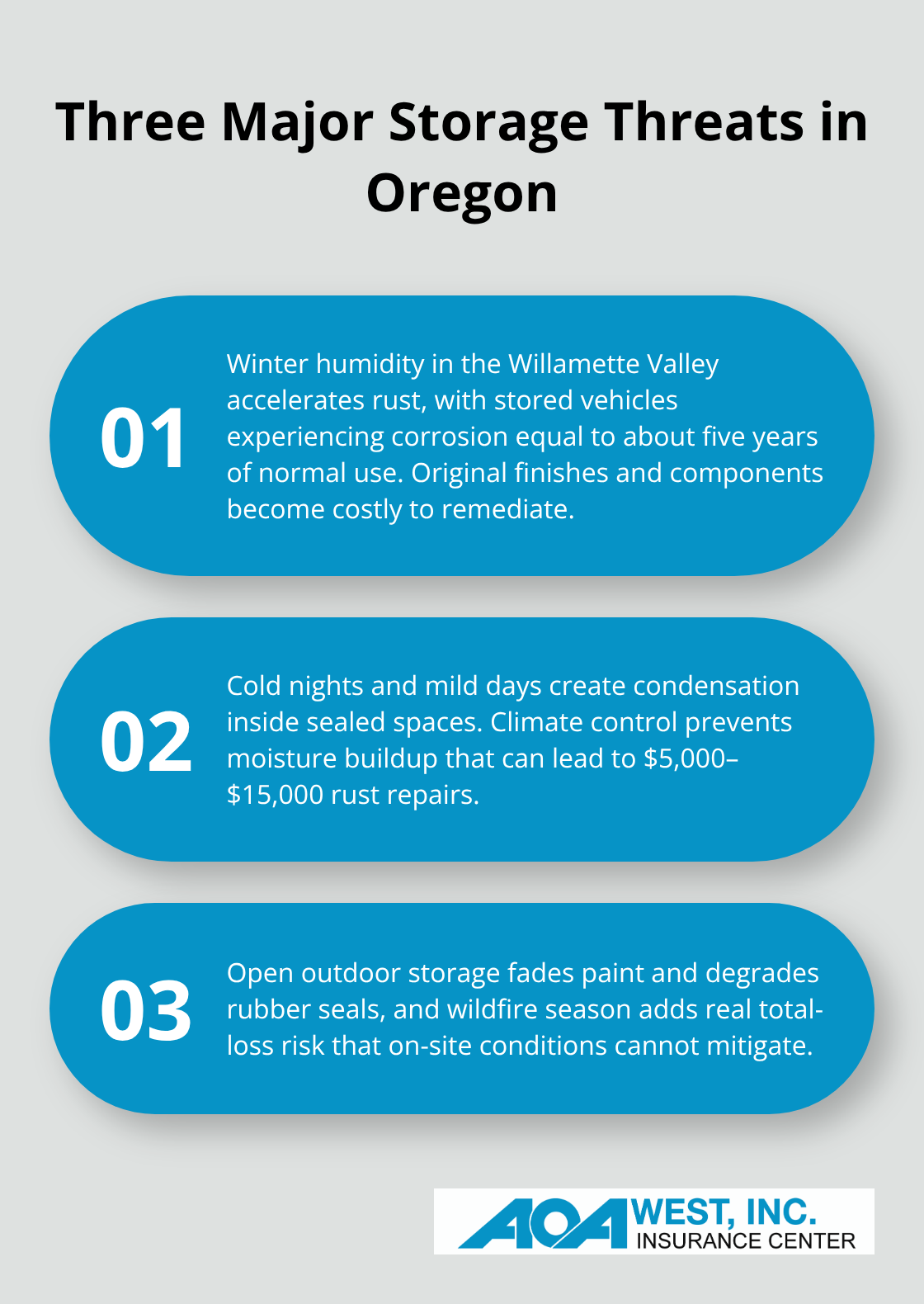
Open outdoor storage exposes your vehicle to direct sun damage that fades paint and degrades rubber seals, plus Oregon’s wildfire season creates total-loss risk that agreed value coverage addresses but outdoor storage cannot mitigate.
Theft and Vandalism in Unsecured Facilities
Theft and vandalism represent a serious storage risk, particularly in facilities without proper security infrastructure. Tigard-area storage providers with highest customer satisfaction ratings average 4.7 stars from approximately 2,438 reviews, with gated access and surveillance cameras cited as essential security features by renters. A classic car stored in an unsecured outdoor lot or a facility without 24/7 monitoring faces genuine theft risk, especially if rare parts or original components attract opportunistic thieves who know collector vehicle values.
Mechanical Deterioration from Long-Term Inactivity
Mechanical deterioration from long-term inactivity creates a third threat: fuel systems develop gum deposits, brake fluid absorbs moisture and loses effectiveness, and battery discharge can damage electrical systems. Storage policies that include active restoration coverage protect your vehicle while it sits partially disassembled during restoration work, addressing the gap that standard auto insurance cannot fill.
Coverage Requirements and Protection Gaps
Oregon regulations require that your stored classic maintain liability coverage meeting state minimums of $25,000 per person and $50,000 per accident, yet these baseline requirements provide zero protection for the vehicle itself against storage-specific perils. Comprehensive coverage becomes your practical tool for addressing fire, theft, vandalism, and weather damage while your classic remains stationary, which is why selecting storage-focused policies over standard auto insurance protects both your financial investment and your ability to enjoy these vehicles for decades.
Final Thoughts
Protecting your classic car collection in Oregon requires more than standard auto insurance-you need agreed value coverage, climate-controlled storage, and policies built specifically for collectors. Oregon’s damp winters and wildfire season create genuine threats to stationary vehicles, and comprehensive coverage addresses fire, theft, and weather damage that standard policies ignore. Agreed value ensures you recover the full appraised amount rather than a depreciated figure, while active restoration coverage protects your investment during work-in-progress phases and disaster relocation assistance moves your vehicle ahead of wildfires or floods.
Your storage choice directly impacts both your premium and actual protection. Climate-controlled indoor units in Tigard average around $316 monthly for a standard 10-by-20-foot space, preventing rust and seal deterioration that plague uncontrolled storage. Outdoor options cost less but expose your classic to sun damage and precipitation that accelerates deterioration far beyond what you save on storage fees, and Oregon regulations require liability coverage that provides zero protection for the vehicle itself-comprehensive and agreed value coverage fill that critical gap.
At AOA West, Inc., we work with multiple carriers to help Tigard collectors compare classic car storage coverage Oregon options and identify policies matching your specific vehicles and storage situation. As a family-owned independent agency serving this community since 1979, we understand the local climate risks and lender requirements that affect your coverage decisions. Contact us today to receive a personalized quote that addresses your actual risks rather than generic coverage that leaves gaps when you need protection most.
Disclaimer: The information provided in this blog is for general informational purposes only and does not constitute legal, financial, or insurance advice. Coverage options, terms, and availability may vary. Please consult with a licensed professional for advice specific to your situation. Artificial intelligence may have been used to generate text and images in some blog articles.