

Condo insurance in Oregon protects your personal belongings and liability inside your unit, but many owners don’t realize what their HOA master policy actually covers. At AOA West, Inc., we’ve seen firsthand how gaps in coverage can leave condo owners vulnerable to unexpected expenses.
This guide walks you through the essentials of condo insurance Oregon, from understanding what your policy includes to identifying common coverage gaps that could cost you thousands.
What Your Condo Insurance Actually Covers
The HOA Master Policy vs. Your Personal Coverage
Your HOA master policy covers the building structure itself-the walls, roof, and common areas-but stops at your unit’s interior walls. Your condo insurance steps in to protect your personal belongings inside your unit, from furniture and electronics to clothing and kitchen appliances. Oregon law doesn’t mandate condo insurance, but your HOA likely requires it as a condition of ownership, which means you’re already paying for it whether you understand what it does or not.
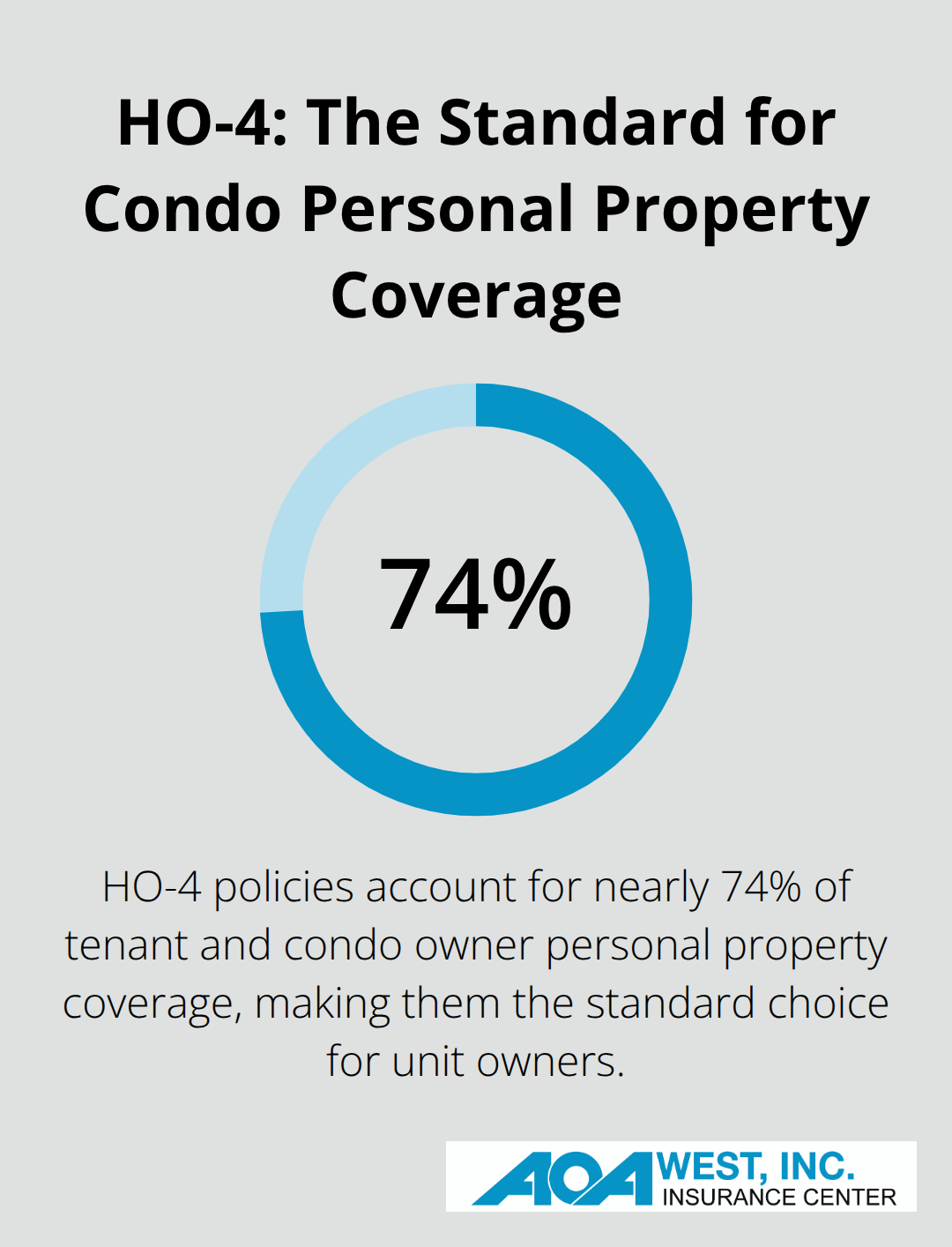
The distinction matters enormously. If your unit suffers damage from fire, theft, or vandalism, the HOA master policy won’t reimburse you for your possessions or improvements you’ve made to your interior. According to the National Association of Insurance Commissioners, HO-4 coverage accounts for nearly 74% of tenant and condo owner personal property coverage, making it the standard protection for unit owners.
Standard Coverage Limits and High-Value Items
Standard condo policies in Oregon typically cover your personal belongings up to a specific limit-often $10,000 to $25,000-plus liability protection if someone gets injured in your unit. However, high-value items like jewelry, art, or collectibles usually have sub-limits of $1,500 to $2,500 per category, which means you’ll need a separate rider if you own anything valuable.
This gap catches many owners off guard. A single piece of jewelry or an art collection can exceed these sub-limits within minutes, leaving you responsible for the difference.
Water Damage and Flood Coverage Gaps
Water damage coverage appears in most policies, but this is where Oregon condo owners face real problems: standard policies don’t cover flood damage, and Oregon experiences significant rainfall that can cause flooding in basements and lower-level units. The Oregon Department of Consumer and Business Services doesn’t regulate condo insurance rates the way it does auto insurance, which means carriers have flexibility in what they charge and what they exclude.
Lower-level units face particular risk during heavy rain events. You need to ask your carrier specifically whether flood protection is available as an add-on, since most standard policies exclude it entirely.
Loss Assessment Coverage and Special Assessments
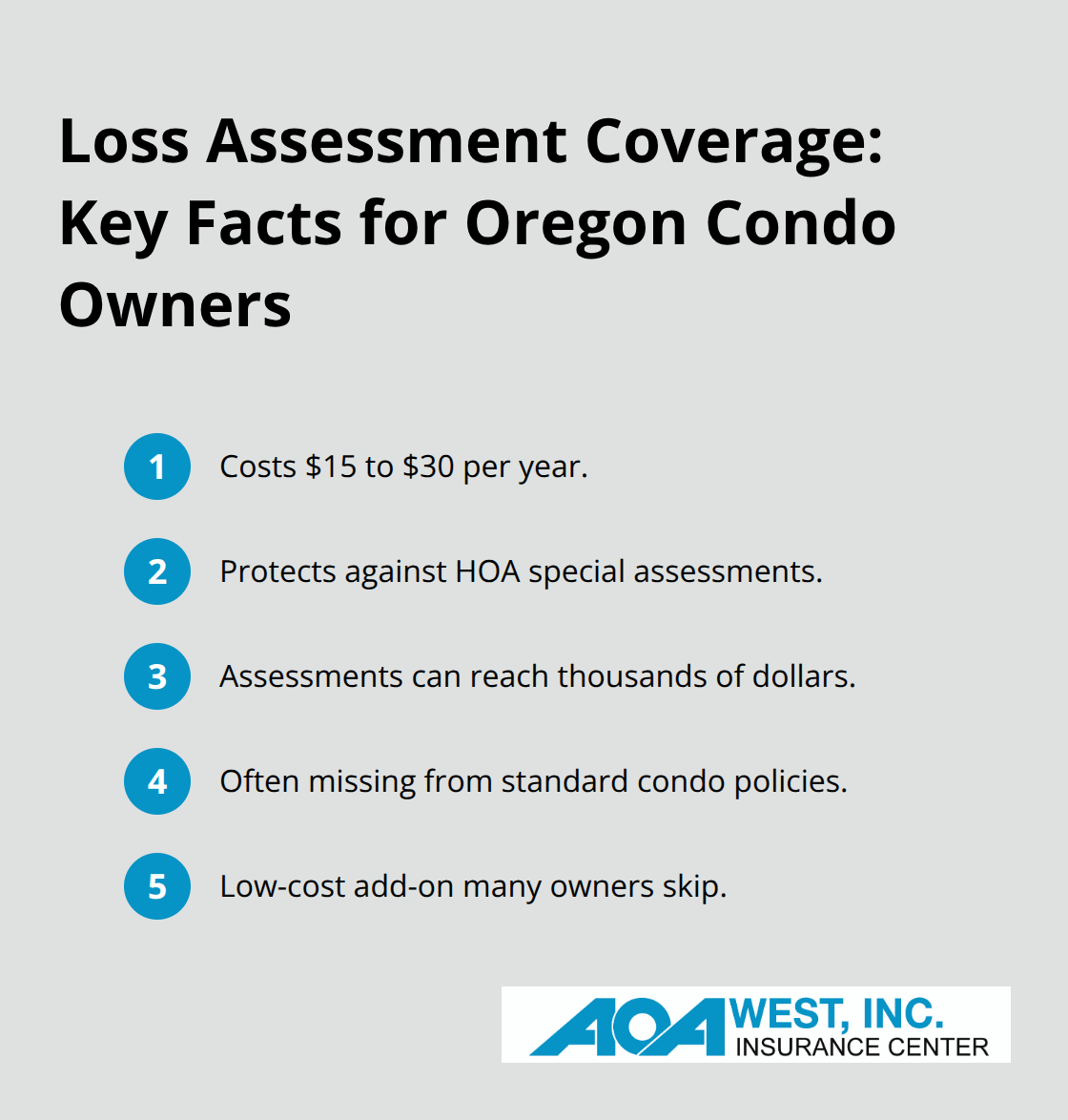
Loss assessment coverage-which protects you if your HOA needs to levy special assessments against owners for major repairs-typically isn’t included in standard policies and costs only $15 to $30 extra per year, yet most owners skip it. When an HOA faces unexpected costs for roof replacement, foundation work, or structural repairs, individual owners can face assessments of thousands of dollars. This coverage absorbs those costs, making it one of the most overlooked protections available.
Getting Local Expertise for Your Specific Situation
Every condo complex has different coverage arrangements and exclusions based on what the HOA master policy includes. A local agent who understands Oregon condo complexes can review your specific HOA master policy and identify exactly what gaps exist in your current protection. This personalized review reveals whether your current limits match your actual belongings and whether your unit’s location (ground floor, top floor, or corner unit) creates additional risks that standard coverage doesn’t address.
What Most Condo Owners Miss in Their Coverage
Loss Assessment Coverage: The $15 Protection Most Skip
Most Oregon condo owners overlook loss assessment coverage, yet this protection costs only $15 to $30 annually. When your HOA faces unexpected expenses for structural repairs, roof replacement, or foundation work, individual owners face special assessments that can range from $2,000 to $10,000 or more depending on your complex’s age and condition. Without this coverage, you pay these costs out of pocket regardless of whether you caused the damage. This single gap exposes you to thousands in unplanned expenses that a minimal annual premium would prevent.
Water Damage and Flood Risk in Oregon’s Climate
Standard condo policies cover water damage from burst pipes or internal plumbing failures, but they explicitly exclude flood damage from heavy rain, groundwater intrusion, or overwhelmed drainage systems. Oregon receives an average of 43 inches of rain annually, with coastal regions receiving significantly more, making flood risk substantial for lower-level and basement units. Separate flood insurance through the National Flood Insurance Program costs approximately $400 to $800 per year for condo owners, but this protection requires a separate request from your carrier-it won’t appear automatically in your standard policy.
Liability Limits That Fall Short of Real Costs
Standard condo policies typically include $100,000 to $300,000 in liability protection per occurrence, which sounds adequate until you consider actual medical costs. A single injury claim in your unit can exceed these limits within minutes (someone slipping on your flooring or suffering an allergic reaction can generate medical bills, legal fees, and settlement costs that quickly surpass standard coverage). Oregon residents face above-average liability risk because state courts tend to award damages generously in personal injury cases.
Personal Belongings Coverage That Underprotects Your Actual Assets
Your personal belongings limit often fails to reflect the actual value of electronics, furniture, and household items accumulated over years. Most owners underestimate their belongings’ replacement cost-furniture alone in a typical two-bedroom condo averages $8,000 to $15,000 at replacement value. When you add electronics, kitchen equipment, clothing, and other items, many units contain $30,000 to $50,000 in personal property that standard $15,000 limits leave severely underprotected. High-value items like jewelry, art, or collectibles face even tighter sub-limits of $1,500 to $2,500 per category, requiring separate riders for adequate protection.
Getting Personalized Coverage Assessment
Every condo complex has different coverage arrangements and exclusions based on what the HOA master policy includes. A local agent who understands Oregon condo complexes can review your specific HOA master policy and identify exactly what gaps exist in your current protection. This personalized review reveals whether your current limits match your actual belongings and whether your unit’s location (ground floor, top floor, or corner unit) creates additional risks that standard coverage doesn’t address. Understanding these gaps positions you to make informed decisions about which additional protections make sense for your specific situation.
Selecting Coverage That Actually Matches Your Situation
Review Your HOA Master Policy First
Obtain a copy of your HOA master policy from your homeowners association, then schedule a call with a local agent who can review it alongside your current condo insurance. This step matters because every complex structures coverage differently-some HOAs carry broader building protection that reduces your individual burden, while others leave significant gaps. Your agent needs to see the actual policy language, not just your assumptions about what it covers.
Many Oregon condo owners discover during this review that their HOA master policy excludes certain areas entirely (like balconies, patios, or upgraded flooring), meaning these improvements fall entirely on your personal policy. Once you understand what the master policy actually covers, you can identify which additional protections make financial sense for your specific unit.
Compare Quotes from Multiple Carriers
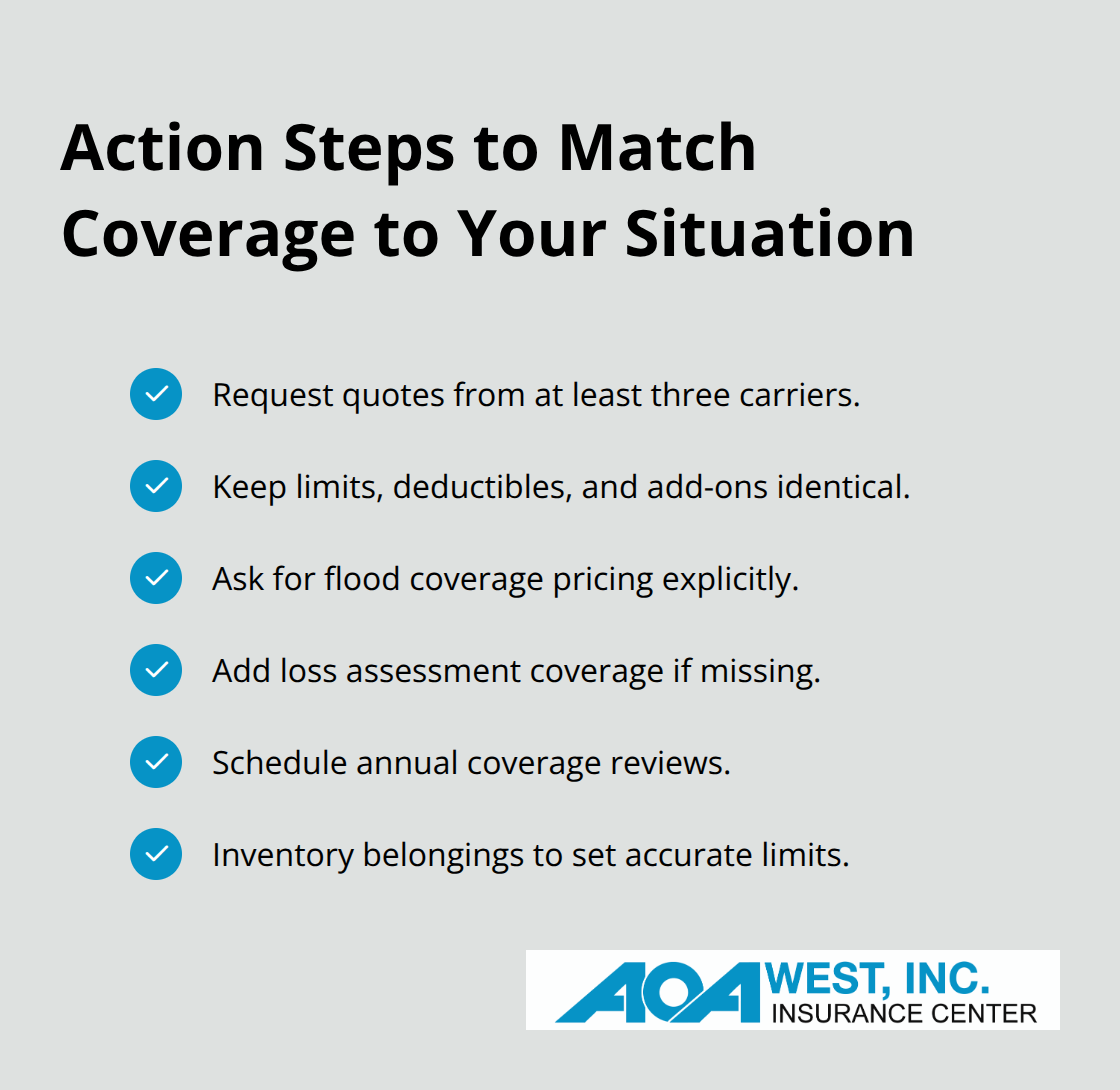
Request quotes from at least three different carriers rather than accepting the first offer, since condo insurance rates vary dramatically based on how each company assesses risk. When requesting quotes, provide identical information to each carrier-same coverage limits, same deductibles, same add-ons-so the price differences reflect actual underwriting variations rather than different coverage terms.
Most carriers in Oregon charge between $300 and $600 annually for basic condo coverage with standard limits, but this fluctuates significantly based on your unit’s age, location within the complex, previous claims history, and whether you add flood or loss assessment coverage.
Work with a Local Independent Agent
A local independent agent in Tigard gives you access to multiple carriers simultaneously rather than calling each company individually, which saves time and provides better comparisons. An agent can also explain why certain carriers charge more or less-perhaps one company rates older buildings more aggressively, or another applies higher premiums to lower-level units.
This transparency matters because the cheapest quote often excludes protections you actually need, making it genuinely more expensive once you add necessary riders. Request that your agent specifically clarify what flood coverage costs as a separate add-on, since this protection requires a distinct application through the National Flood Insurance Program and won’t appear in standard policy quotes.
Identify Additional Savings and Coverage Options
Ask whether your complex qualifies for any group discounts through your HOA, since some associations negotiate reduced rates for all residents. Establish annual review appointments with your agent rather than simply renewing the same policy year after year, because your coverage needs change as you accumulate belongings, make interior improvements, or your complex ages and faces new risks. Each review session allows your agent to adjust your limits and add-ons to reflect your current situation.
Final Thoughts
Condo insurance in Oregon requires more attention than most owners give it, but the effort pays off when you actually need coverage. Start by pulling your HOA master policy and your current condo insurance declarations page, then place them side by side to reveal exactly what your HOA covers versus what falls on you. Next, calculate your personal belongings’ replacement cost by walking through your unit room by room and estimating what you’d need to spend to replace everything-most owners discover their current limits fall short of this actual value, which means adding coverage makes financial sense rather than hoping nothing happens.
Request quotes from multiple carriers using identical coverage terms so you can see real price differences. When comparing quotes, ask each carrier specifically about flood coverage costs and loss assessment protection, since these protections require separate requests and won’t appear in standard policy quotes. The difference between the cheapest quote and a properly protected condo insurance Oregon policy often amounts to just $30 to $50 annually-a small price against the thousands you’d pay out of pocket for a special assessment or water damage claim.
A local independent agent can review your specific HOA master policy, explain what your current coverage includes and excludes, and show you exactly what additional protections cost. We at AOA West, Inc. have worked with Tigard condo owners since 1979 to identify these coverage gaps and build protection that actually matches individual situations. This personalized guidance takes the guesswork out of condo insurance decisions and positions you to make choices based on your actual risk rather than generic policy language.
Disclaimer: The information provided in this blog is for general informational purposes only and does not constitute legal, financial, or insurance advice. Coverage options, terms, and availability may vary. Please consult with a licensed professional for advice specific to your situation. Artificial intelligence may have been used to generate text and images in some blog articles.