

Condo owners in Oregon face insurance costs that vary significantly based on location, building features, and coverage choices. At AOA West, Inc., we help Tigard residents understand what drives their Oregon condo insurance cost so they can make informed decisions.
This guide breaks down the factors affecting your premiums and shows you practical ways to reduce what you pay.
What Drives Your Oregon Condo Insurance Cost
Your Oregon condo insurance premium reflects three primary factors that insurers evaluate when calculating your rate. Location matters significantly because Tigard and surrounding areas present different risk profiles. Properties in flood-prone zones or areas with higher theft rates face steeper premiums than those in safer neighborhoods. Property value directly impacts your cost-a condo valued at $350,000 requires more coverage than one worth $200,000, and insurers adjust rates accordingly. Building age represents another major driver. Condos built before 1980 typically cost more to insure because older electrical systems, plumbing, and roofing increase claim likelihood. Construction type also factors heavily. A wood-frame building presents higher fire risk than concrete construction, which translates to higher premiums. Your coverage choices directly control what you pay each month.
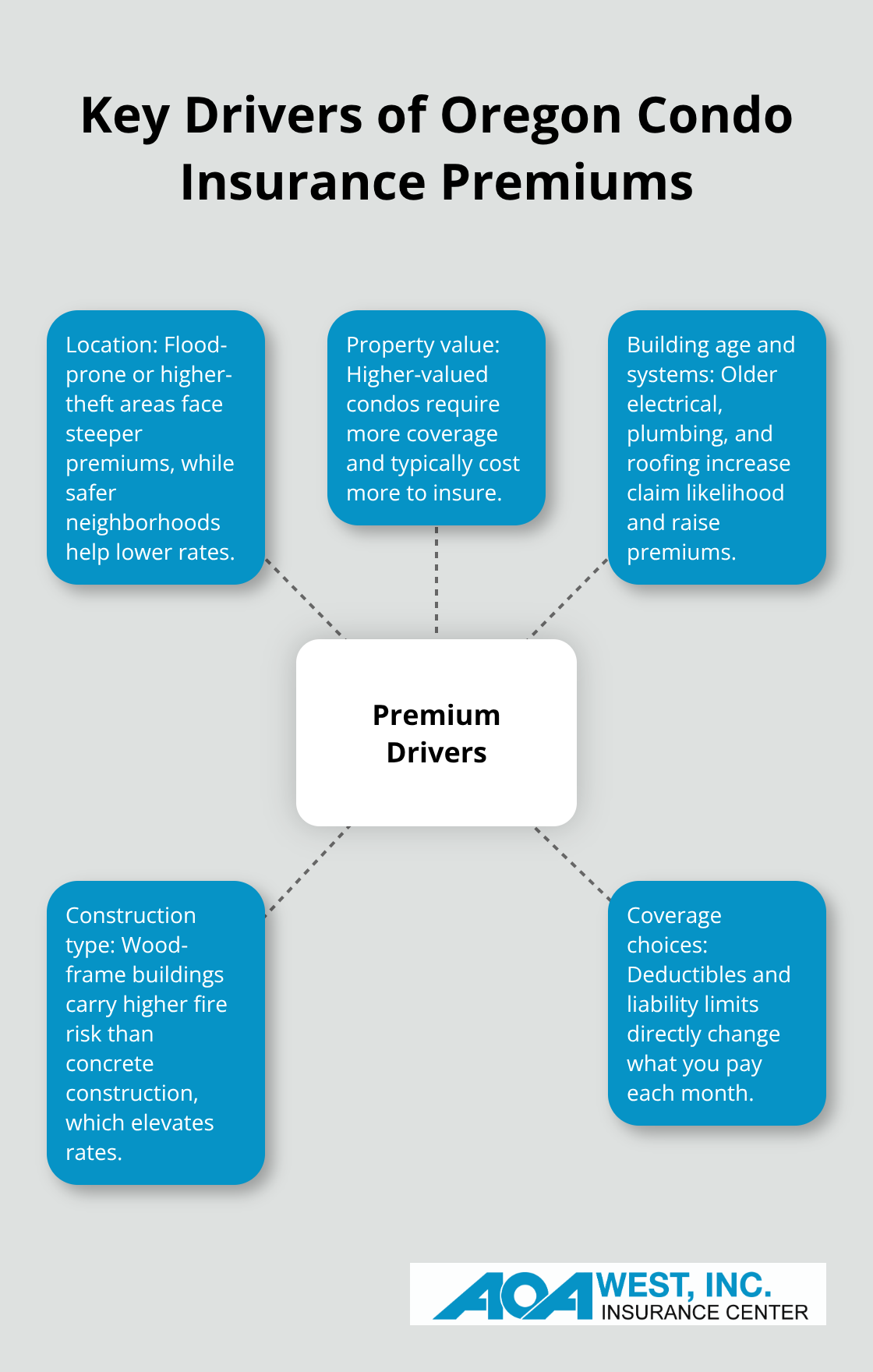
A $500 deductible results in lower premiums than a $250 deductible, though you’ll pay more out-of-pocket if you file a claim. Coverage limits matter equally-selecting $100,000 in liability protection costs considerably less than $300,000, but leaves you exposed if someone is injured on your property. Oregon doesn’t mandate specific liability minimums for condo owners, which means you have flexibility but also responsibility in choosing adequate protection.
Building Characteristics That Impact Your Rate
Newer condos with updated systems command lower premiums because they have fewer mechanical failures and fire risks. If your building underwent recent renovations to its roof, electrical system, or plumbing within the last five years, inform your agent-this often qualifies you for rate reductions. Buildings with professional management and well-maintained common areas also receive better rates because they demonstrate lower overall risk. Conversely, buildings with deferred maintenance or ongoing structural issues will see higher premiums across all units.
How Your Personal Choices Affect Price
Your credit score influences your condo insurance cost more than many owners realize. Insurers in Oregon use credit-based insurance scores because studies show strong correlation between credit responsibility and claim frequency. Your claims history matters too-filing multiple claims within five years signals higher risk, even if claims were legitimate. Staying claim-free for three to five years demonstrates stability and can result in meaningful discounts when you shop for renewal. Understanding these personal factors positions you to take control of your rates before you contact an agent about coverage options.
What Oregon Condo Owners Actually Pay
Standard Coverage Costs in Oregon
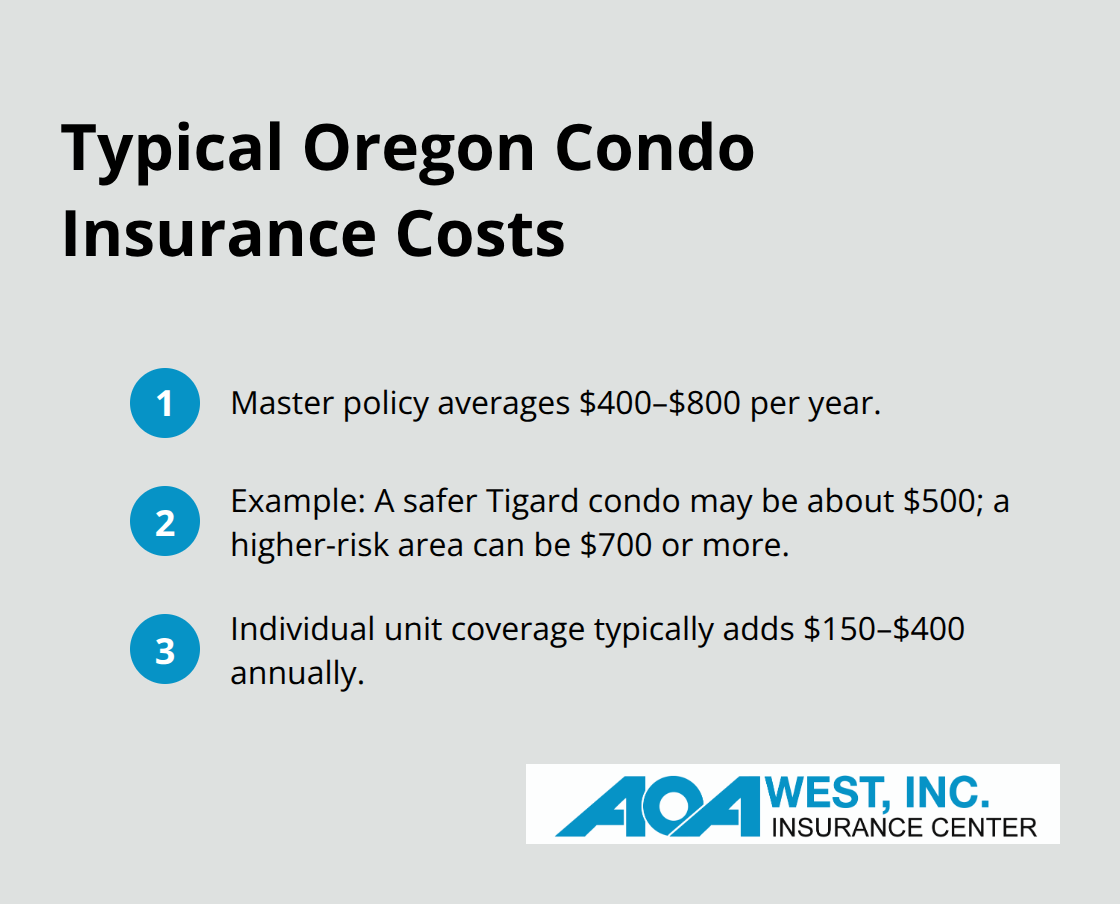
Oregon condo owners typically pay between $400 and $800 annually for standard master policy coverage, though this range expands significantly based on the specific factors discussed in the previous section. A condo valued at $250,000 in Tigard’s safer neighborhoods might cost $500 per year, while a similarly priced unit in a higher-risk area could reach $700 or more. These figures represent master policy coverage only-the insurance the condo association carries on the building structure itself. Your individual unit coverage, which protects your personal belongings and interior improvements, adds another $150 to $400 annually depending on what you own and how much liability protection you select.
How Condo Insurance Compares to Single-Family Homes
The National Association of Insurance Commissioners reported that average homeowner insurance premiums commonly exceed $2,400 annually, but condo owners pay considerably less because the association’s master policy covers the building exterior, roof, and common areas. This cost advantage makes condo ownership attractive from an insurance perspective compared to single-family homes. Oregon’s condo insurance premiums run about 15 to 20 percent lower than the national average for similar coverage levels, according to recent rate analysis data.
Regional Price Variations Across Oregon
Tigard specifically benefits from this pricing advantage because the Portland metro area presents moderate risk profiles compared to coastal regions or rural fire-prone zones. Urban areas like Tigard typically see rates 10 to 25 percent lower than rural Oregon communities because insurers charge more for properties in areas with volunteer fire departments or longer emergency response times. A condo in rural eastern Oregon might cost $950 annually while an identical unit in Tigard costs $700-the difference stems entirely from infrastructure and risk assessment.
Getting Accurate Quotes for Your Situation
When you shop for coverage, request quotes from multiple carriers because premium variations between insurers for the same unit can exceed $200 yearly. These differences reflect each carrier’s underwriting approach, claims experience in your area, and available discounts. An independent insurance agent can show you these variations side-by-side, helping you understand whether a lower premium reflects genuine savings or reduced coverage limits that leave you underprotected. Your next step involves identifying which specific coverage options and deductible levels work best for your financial situation and risk tolerance.
How to Cut Your Condo Insurance Costs
Bundle Policies for Substantial Savings
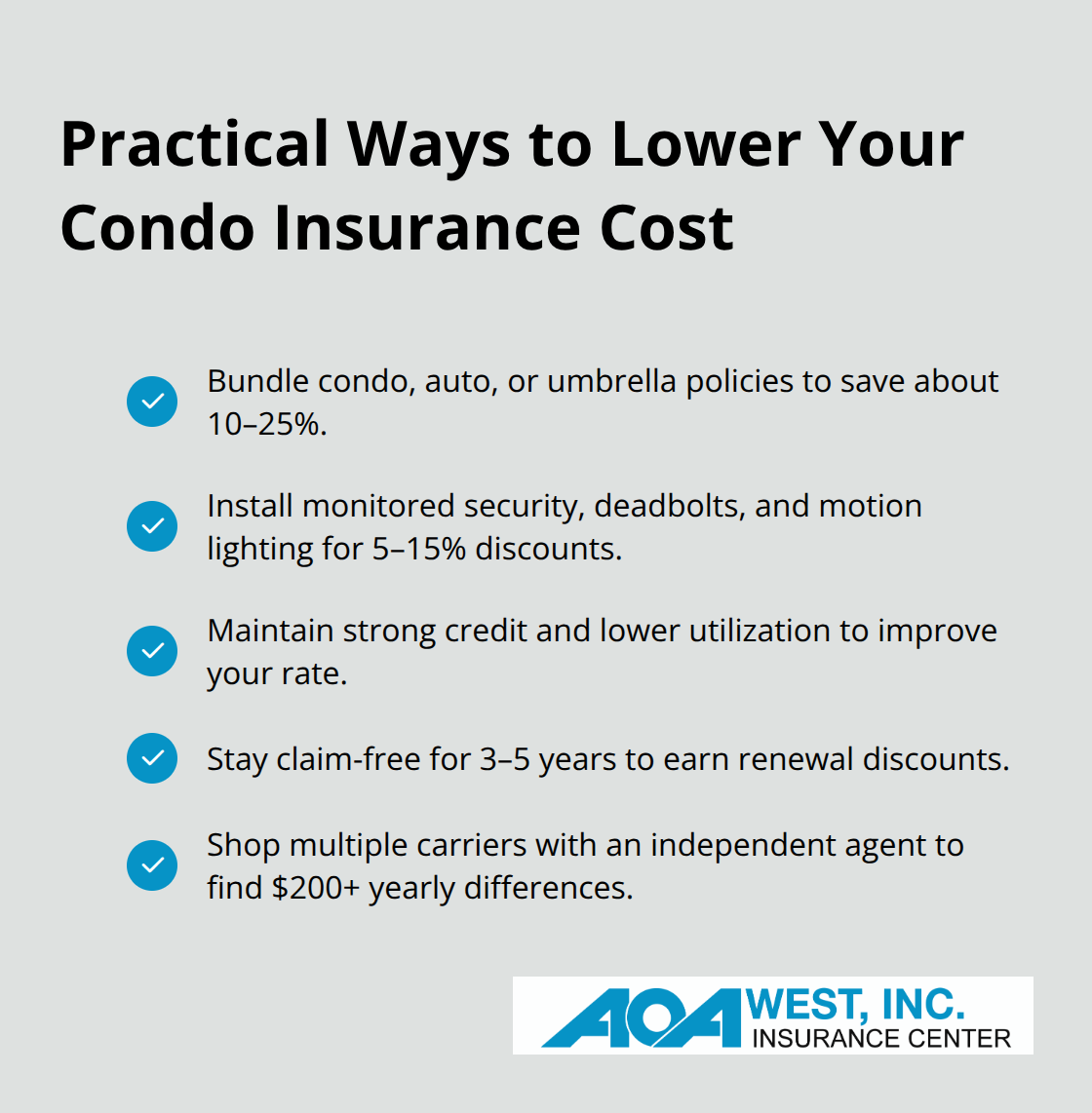
Bundling your condo insurance with auto, umbrella, or other policies typically delivers discounts between 10 and 25 percent across your entire policy portfolio, according to insurance industry data. Most Oregon carriers offer these multi-policy discounts automatically when you consolidate coverage, though the specific percentage varies by insurer and your individual risk profile. An independent agent can show you exactly how much you save by bundling versus keeping policies separate, then help you decide if the savings justify moving all your coverage to one carrier. Some owners assume they already receive bundle discounts without verifying, so requesting a detailed breakdown of your current premiums reveals whether you miss money on the table.
Strengthen Security to Lower Premiums
Security improvements deliver measurable rate reductions because they directly lower theft and break-in risk that insurers pay for through claims. Installing deadbolt locks, motion-sensor lighting, or security system monitoring can reduce your premium by 5 to 15 percent, depending on your carrier’s underwriting criteria and your building’s existing security infrastructure. Tigard’s moderate crime rates mean these improvements matter less than in higher-risk urban centers, but insurers still reward documented safety measures with tangible discounts.
A security system that reports to a monitoring center (rather than simply alerting residents) typically qualifies for larger discounts than passive locks alone.
Improve Your Credit Score and Claims Record
Your credit score influences Oregon condo insurance rates. Staying current on bills, reducing credit utilization, and avoiding new inquiries takes time but directly impacts what you pay for condo coverage. Your claims history functions as an even stronger rate driver than credit, meaning a claim-free five-year period positions you for renewal discounts that accumulate into substantial savings over time.
Shop Multiple Carriers for Best Rates
An independent agent working with multiple carriers ensures you shop for the best rates available rather than staying with a single insurer out of habit. Side-by-side comparisons show exactly how your choices affect your bottom line, revealing premium variations between insurers that often exceed 200 dollars yearly for identical coverage. These differences reflect each carrier’s underwriting approach, claims experience in your area, and available discounts unique to their portfolio.
Final Thoughts
Oregon condo insurance cost reflects the interplay between factors you control and those you cannot change. Your building’s age, construction type, and location in Tigard remain fixed, but your deductible choices, coverage limits, credit management, and claims history directly shape what you pay annually. Most Oregon condo owners spend between $400 and $800 yearly on master policy coverage, with individual unit protection adding another $150 to $400 depending on your belongings and liability limits-costs that run 15 to 20 percent lower than national averages.
Premium variations between insurers for identical coverage frequently exceed $200 annually, making your choice of carrier as important as your coverage selections. Bundling policies typically saves 10 to 25 percent across your entire insurance portfolio, while security improvements and a clean claims record compound additional reductions over time. An independent insurance agent working with multiple carriers shows you these differences clearly, helping you identify genuine savings rather than reduced protection that leaves you exposed.
Contact AOA West, Inc. to review your current coverage and explore how bundling, security improvements, or carrier changes might lower your Oregon condo insurance cost while maintaining the protection your situation requires. We have served Tigard residents since 1979, working with multiple carriers to deliver personalized guidance and clear comparisons for your condo insurance needs.
Disclaimer: The information provided in this blog is for general informational purposes only and does not constitute legal, financial, or insurance advice. Coverage options, terms, and availability may vary. Please consult with a licensed professional for advice specific to your situation. Artificial intelligence may have been used to generate text and images in some blog articles.